
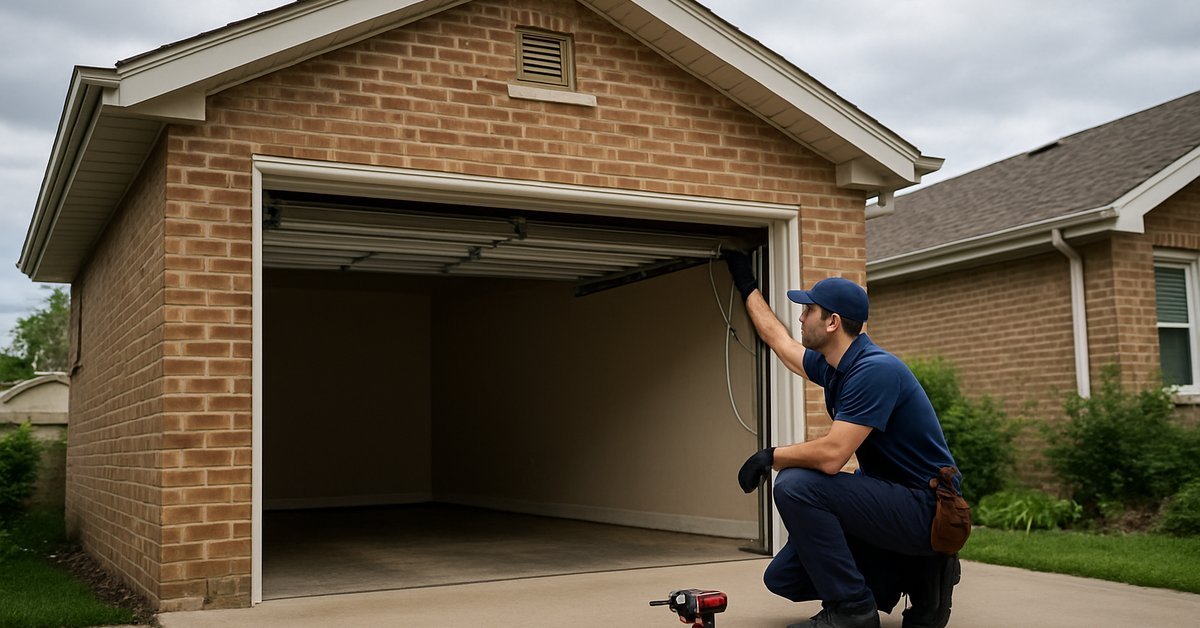
Your garage door just stopped working, and you need to know what this is going to cost you and how fast it can get fixed. In Chicago, most garage door repairs run $150–$650, depending on what broke and whether it’s a spring, cable, panel, or opener issue. Chicago winters are brutal on garage door hardware, which means local pricing reflects faster parts wear and more frequent emergency calls than you’d see in milder climates. This guide breaks down real Chicago repair costs, which neighborhoods see the most problems, what actually requires a permit, and how to avoid getting overcharged. Get a free estimate from a licensed Chicago contractor before you commit to anything.
What Does Garage Door Repair Cost in Chicago Right Now?
In Chicago, garage door repair costs range from $150 for minor adjustments up to $1,200+ for major component replacements. The wide range exists because the actual repair type matters far more than the city you’re in. Spring replacement is the most common big-ticket fix. Panel replacement sits in the middle. Sensor alignment or a simple tune-up? That’s the low end.
| Repair Type | Typical Chicago Cost | Average Time to Complete |
|---|---|---|
| Torsion spring replacement (single) | $200–$350 | 1–2 hours |
| Torsion spring replacement (double) | $300–$450 | 1.5–2.5 hours |
| Cable repair or replacement | $150–$300 | 1–2 hours |
| Roller replacement (set) | $120–$220 | 1–1.5 hours |
| Panel replacement (single panel) | $250–$700 | 2–4 hours |
| Opener repair | $100–$350 | 1–2 hours |
| Off-track repair | $150–$300 | 1–2 hours |
| Sensor alignment / tune-up | $75–$150 | 30–60 minutes |
| Emergency / after-hours service call | $75–$200 surcharge | Varies |
So what drives prices higher in Chicago specifically? A few things. The freeze-thaw cycle puts extra stress on springs and cables every single winter, so parts here wear faster. Fuel costs for service trucks in a dense urban grid like Chicago add to labor overhead. And honestly, companies that run 24/7 emergency lines carry higher operating costs, which get passed on when you call at 11 p.m. on a Sunday.
A homeowner in Logan Square recently paid $285 for a single torsion spring replacement on a two-car garage door that had snapped during a January cold snap. The tech was on-site in under two hours. That’s a pretty typical scenario for mid-winter Chicago repairs. If you want an accurate quote before scheduling, here’s a deeper Chicago cost breakdown with more project examples.
Which Chicago Neighborhoods See the Most Garage Door Problems?
Chicago’s older housing stock is the biggest factor here. Neighborhoods with detached two-car garages accessed from alleyways put far more daily cycles on doors than single-family driveways do. High usage plus aging hardware equals more repair calls.
In Wicker Park and Bucktown, the combination of older brick two-flats and dense alley-access garages means torsion spring failures are extremely common, especially after January and February temperature swings. Homeowners in these neighborhoods often deal with springs that were installed 10–15 years ago and have never been serviced.
In Beverly and Morgan Park on the South Side, larger single-family homes tend to have heavier, older steel doors. Those heavier doors put more load on cables and bottom brackets. Cable fraying and bracket failures show up more frequently here than in neighborhoods with lighter modern doors.
Edgewater and Andersonville on the North Side see a lot of salt corrosion damage from winter road treatment. Salt gets tracked into garages from alley access, accelerating rust on rollers and hinges. The fix is usually a roller replacement or full hardware lubrication and adjustment, which runs $120–$220 before it becomes a bigger problem.
The pattern across all these neighborhoods is the same: alley-accessed detached garages cycle more often, face harsher conditions, and get maintained less frequently than attached garages with direct home access. That’s a recipe for repairs.
What Are the Most Common Garage Door Repairs Chicago Homeowners Need?
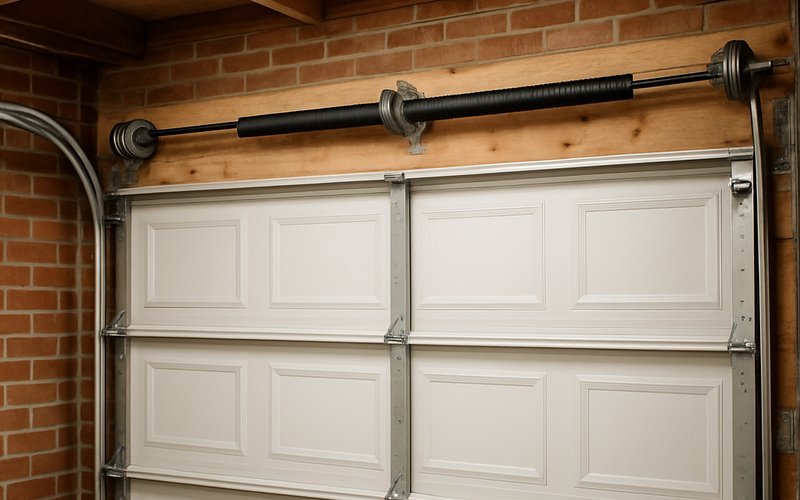
Broken springs are the #1 garage door repair call in Chicago. Full stop. Springs do the heavy lifting, literally, and Chicago’s temperature extremes accelerate metal fatigue faster than in moderate climates.
| Problem | Urgency Level | Typical Chicago Repair Cost |
|---|---|---|
| Broken torsion or extension spring | Urgent (door won’t open) | $200–$450 |
| Snapped or frayed cable | Urgent (door unsafe to use) | $150–$300 |
| Door off-track | Urgent (don’t operate) | $150–$300 |
| Worn or broken rollers | Moderate (noisy, slow) | $120–$220 |
| Damaged panel (cosmetic or structural) | Low to moderate | $250–$700 |
| Opener malfunction | Moderate | $100–$350 |
| Sensor misalignment | Low (door won’t close) | $75–$150 |
Springs fail most often in January and February when metal contracts sharply overnight. Cables go next, usually because a spring failure puts sudden uneven load on them. It’s not unusual to replace both at the same time.
Garage door spring repair is not a DIY job. The springs are under hundreds of pounds of tension, and an improper release can cause serious injury. For everything else — sensors, rollers, lubrication — you can troubleshoot some issues yourself, but a professional visit usually catches secondary problems you’d otherwise miss.
If your door is grinding, slow, or opening unevenly, you might also have a roller or track alignment issue. Check out garage door roller repair signs and costs for a more detailed look at that specific problem.
Does Chicago Require a Permit for Garage Door Repair or Replacement?
In Chicago, routine garage door repairs do not require a permit. Replacing springs, cables, rollers, panels, or an opener falls under maintenance work, and the Chicago Department of Buildings does not require permits for these jobs.
Where it gets more complicated is full garage door replacement, especially if structural changes are involved. If you’re replacing the door and modifying the rough opening, widening the frame, or changing the structural header, you’ll need a permit from the Chicago Department of Buildings. Their offices are located at 121 N. LaSalle Street, and permits for residential garage work can be applied for online through the City of Chicago’s permit portal.
A few practical notes. If your garage is a detached structure and you’re doing significant work on it — new framing, electrical for an opener circuit, or foundation modifications — that triggers permit requirements too. But straightforward repair work? No permit needed, no inspection required.
For a full breakdown of what does and doesn’t require a permit, including the specific code citations, this Chicago garage door permit guide is the most detailed resource we’ve put together on the topic.
When Should You Call for Emergency Garage Door Repair in Chicago?
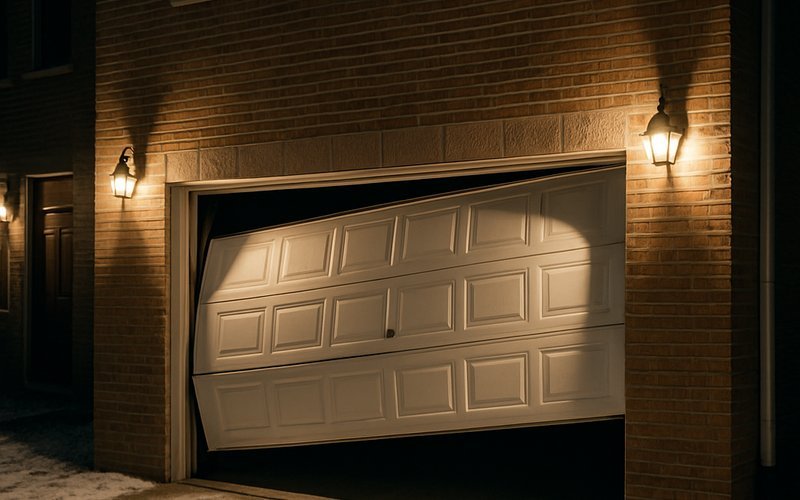
Emergency garage door repair in Chicago is worth calling for immediately when your door is stuck open, stuck partially open, or has come off its tracks. These aren’t “wait until Monday” situations.
A door stuck open is a security emergency, plain and simple. Your home is accessible from the alley or street, and in Chicago that’s a real risk. Don’t wait. Call for same-day or emergency service.
A door that’s partially open and won’t move at all usually means a broken spring or snapped cable. Operating it manually can cause the door to drop suddenly, which is dangerous. Stop trying to force it and call a tech.
Here’s what can usually wait a few days without major risk:
- A slow or noisy door that still opens and closes fully
- A remote that’s intermittently failing (check the battery first)
- A cosmetically damaged panel with no structural compromise
- A sensor light that blinks but the door still works normally
In Chicago, most reputable companies offer same-day emergency garage door repair with arrival windows of 1–4 hours. After-hours calls (nights and weekends) typically carry a surcharge of $75–$200 on top of the repair cost. That’s worth it if your door is wide open at midnight. Less worth it if the door is just noisy. For a full breakdown of what to expect after hours, this guide on 24-hour garage door repair in Chicago covers exactly what happens when you make that call.
Is It Time to Repair or Replace Your Garage Door?
Most of the time, repair is the right call. A door that’s less than 15 years old with a broken spring or damaged cable is almost always worth fixing. The repair cost is a fraction of replacement, and the door itself still has years of life in it.
But there are situations where repair costs start stacking up in a way that makes replacement the smarter financial move. If you’ve replaced springs twice in three years and now a cable has snapped and a panel is cracked, you’re probably throwing money at a door that’s at end of life.
The honest rule: if a single repair costs more than 50% of a new door’s installed price, get a replacement quote before committing. A new single-car residential door installed in Chicago typically runs $800–$2,000, depending on material and style. If your repair quote is pushing $900+ on a 20-year-old door, that’s a real decision point.
A homeowner in Edgewater came to us with a door that had a broken torsion spring, two bent panels, and a failing opener motor — all on a 22-year-old insulated steel door. Repairing everything would’ve cost $1,100–$1,400. A full replacement with a mid-grade insulated door came in at $1,450 installed. They replaced it. That’s the math that matters.
How to Keep Repair Bills Low: Maintenance Tips for Chicago Homeowners
The single best way to avoid expensive garage door repair in Chicago is regular maintenance. This isn’t generic advice — Chicago’s climate makes it genuinely non-optional. Springs and cables that go unlubricated through a Chicago winter are going to fail sooner. It’s that straightforward.
Here’s what a basic maintenance routine actually involves:
- Lubricate torsion springs, hinges, and rollers with a lithium-based spray every 6 months (not WD-40, which strips lubrication)
- Check cable tension visually every spring and fall — fraying or uneven tension is visible before a full break
- Test the auto-reverse function monthly by placing a 2×4 flat on the ground in the door’s path
- Inspect weatherstripping along the bottom seal every fall before freeze season
- Clear tracks of debris and check for dents or misalignment annually
A professional tune-up in Chicago costs $75–$150 and typically catches problems before they become $300+ repairs. If you want to understand exactly what that service covers and why it matters in Chicago’s climate specifically, our garage door maintenance service page breaks down everything that goes into a proper inspection and what it actually prevents.
How to Hire the Right Garage Door Repair Company in Chicago
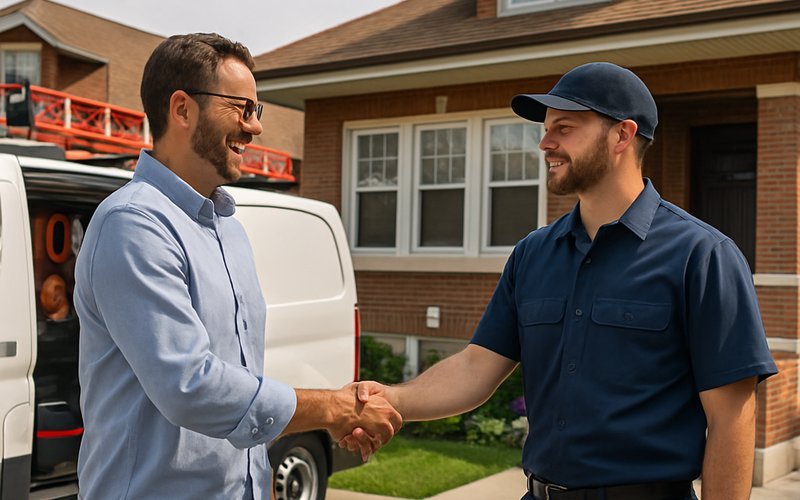
Finding a trustworthy garage door repair company in Chicago takes about 10 minutes of due diligence, and it’s worth doing before you’re in an emergency situation. Here’s what to actually check.
First, verify their Illinois contractor license. Garage door technicians in Illinois should carry a valid contractor license. Ask for it, or verify through the Illinois Department of Financial and Professional Regulation. Unlicensed operators are more common than you’d think, especially in high-demand periods like February when spring failures spike.
Second, get an itemized written estimate before any work starts. A legitimate Chicago garage door repair estimate should list the specific parts being replaced (with part numbers or descriptions), labor cost separately, and any service call or diagnostic fee clearly stated.
Third, watch for these red flags:
- A quote given over the phone with no diagnostic — legitimate techs need to see the door
- Pressure to replace both springs when only one broke — sometimes correct, but it should be explained to you
- Unusually low service call fees ($19–$29) that bait-and-switch into inflated parts pricing
- No written estimate before work begins
And ask about warranty. Parts and labor should be separately warranted. A standard spring warranty from a reputable Chicago company runs 1–3 years on parts, with labor guaranteed for at least 30–90 days. Less than that is a red flag. Ready to get a straight answer on what your repair will cost? Contact Fairway Garage Door for a free, no-pressure estimate from a licensed Chicago technician.