
A garage door motion sensor is designed to detect movement and trigger a response from the opener or lighting system. When it stops working, homeowners often wonder whether the issue is electrical, mechanical, or sensor-related.
From what we have seen in the field, motion sensor problems are usually tied to calibration issues, environmental interference, or component wear rather than sudden failure.
Understanding why a garage door motion sensor stops working helps determine whether the issue is simple or requires professional attention.
What a Garage Door Motion Sensor Does
A garage door motion sensor detects movement inside or near the garage. Depending on the system, it may turn on lights, prevent the door from closing, or signal the opener to pause operation. These sensors are commonly built into the opener housing or mounted nearby.
When homeowners report that a Garage Door Motion Sensor Is Not Working, the issue is often not the motor or remote but the sensor’s ability to detect motion accurately.
What Is a Garage Door Trip Sensor
A garage door trip sensor is part of the safety system that reacts when movement or interruption is detected. While the term is sometimes used interchangeably with motion sensor, a trip sensor is a component that triggers a response when a threshold is crossed. That threshold could be movement, a beam interruption, or a sudden signal change.
In simple terms, the trip sensor tells the opener when something should stop or change the door’s behavior. If that signal is not received correctly, the system may behave unpredictably or fail to respond.
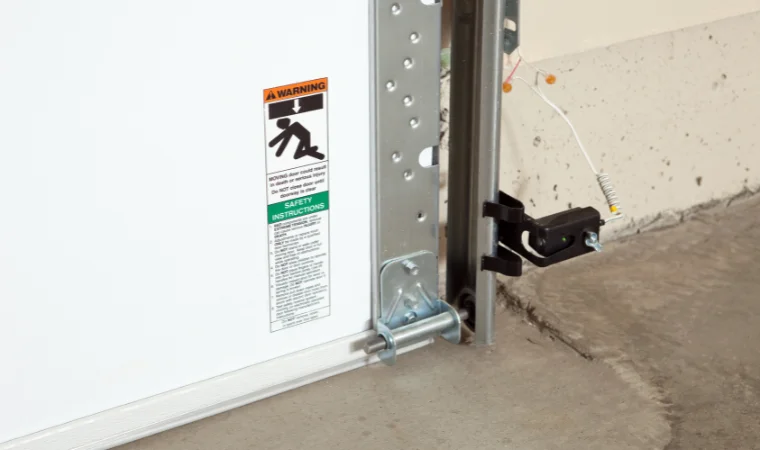
Why Garage Door Motion Sensors Fail
From our experience, there are several common reasons motion sensors stop working properly.
1. Sensor Range or Sensitivity Issues
Motion sensors rely on a defined detection range. If sensitivity settings drift or the sensor lens becomes obstructed, movement may not be detected.
2. Environmental Interference
We found that dust, cobwebs, temperature fluctuations, or humidity can degrade sensor performance. Even airflow from vents can affect detection in some garages.
3. Electrical or Power Problems
Loose wiring, voltage drops, or aging internal components can prevent the sensor from sending a proper signal. This is a common cause when a garage door motion sensor not working appears suddenly.
4. Alignment or Mounting Shifts
Sensors can shift over time due to vibration or minor impacts. When the angle changes, the detection field may no longer cover the intended area.
5. Aging Sensor Components
Like any electronic component, motion sensors wear out. Over time, internal circuitry may become less responsive.
How Motion Sensors Interact With the Garage Door System
Motion sensors do not operate in isolation. They communicate with the opener’s logic board and safety systems. When the sensor detects movement, it sends a signal that may turn on lights, delay closing, or stop operation.
If communication between the sensor and the opener is interrupted, the system may ignore movement. In many cases, when a garage door motion sensor is not working, the sensor reports having power but no longer communicates reliably.
Common Signs of a Motion Sensor Issue
• Garage lights do not turn on with movement
• Door closes even when someone is present
• Motion is detected only intermittently
• Sensor works at night but not during the day
• System responds inconsistently to movement
These symptoms often point to detection or signal issues rather than complete sensor failure.
Safe Observations Homeowners Can Make
We suggest starting with simple checks that do not involve tools:
• Make sure the sensor lens is clean
• Look for objects blocking the detection field
• Observe whether lighting conditions affect performance
• Check if the sensor responds from different distances
• Note whether issues happen consistently or randomly
These observations help determine whether the problem is environmental or system-related.
Fixes for Garage Door Motion Sensor Issues
When a Garage Door Motion Sensor Not Working persists, the most common corrective steps usually involve recalibration, repositioning, or component replacement by a professional.
We recommend a professional evaluation if:
• The sensor fails after repeated adjustments
• Motion detection stops completely
• The door behaves unpredictably
• Electrical components appear involved
Motion sensors are directly tied to safety systems, so proper handling is essential.
Why Motion Sensors Are Sensitive by Design
Motion sensors are intentionally designed to be sensitive to prevent unsafe conditions. False triggers are preferred over missed detection when safety is involved.
For a broader context on how motion sensors are designed and how environmental factors affect them, Consumer Reports provides a helpful overview of motion sensor technology here.
This explains why small environmental changes can affect sensor performance.
Preventing Motion Sensor Problems
From what we have found, motion sensors last longer when:
• The garage is kept relatively clean and dry
• Sensors are not exposed to direct airflow
• The mounting area is stable
• Regular system inspections are performed
Prevention reduces false readings and extends sensor lifespan.
Frequently Asked Questions
Why is my garage door motion sensor not working consistently?
Environmental factors, sensitivity drift, or communication issues are common causes.
Is a garage door trip sensor the same as a motion sensor?
They are related. A trip sensor triggers a system response when motion or interruption is detected.
Can sunlight affect motion sensors?
Yes. Rapid temperature changes and light exposure can interfere with detection.
Do motion sensors affect door closing?
In many systems, yes. They can delay or stop closing when movement is detected.
Should a motion sensor be replaced or repaired?
That depends on age, condition, and whether calibration restores proper function.
Final Thoughts
When a garage door motion sensor stops working, the issue is often due to detection accuracy, environmental interference, or aging components, rather than a sudden failure. Motion and trip sensors play an important role in safety, and even small disruptions can change how the system behaves.
In our experience, careful observation helps determine whether the issue is temporary or requires professional attention. Addressing sensor issues early helps ensure safe, predictable operation of the garage door.