
If you’re an Arlington Heights homeowner, you already know that garage door problems Chicago winter weather brings are a very real threat to your daily routine. The kind of cold that freezes your windshield wiper fluid mid-spray. The kind of wind that turns a 15-degree day into something genuinely dangerous. And in the middle of all that, the last thing you want is a garage door that won’t open at 7 a.m. on a Tuesday. Garage door problems in Chicago winters don’t usually show up without warning. There are almost always signs. You just have to know what to look for before the first hard freeze locks your problems in place.
Why Arlington Heights Winters Are Hard on Garage Doors
In Arlington Heights, garage doors take a beating that most people don’t think about until something breaks. The freeze-thaw cycle is the real villain. Temperatures swing dramatically from late October through March, sometimes dropping below zero and then bouncing back above freezing within 48 hours. That repeated contraction and expansion stresses every moving part on your door.
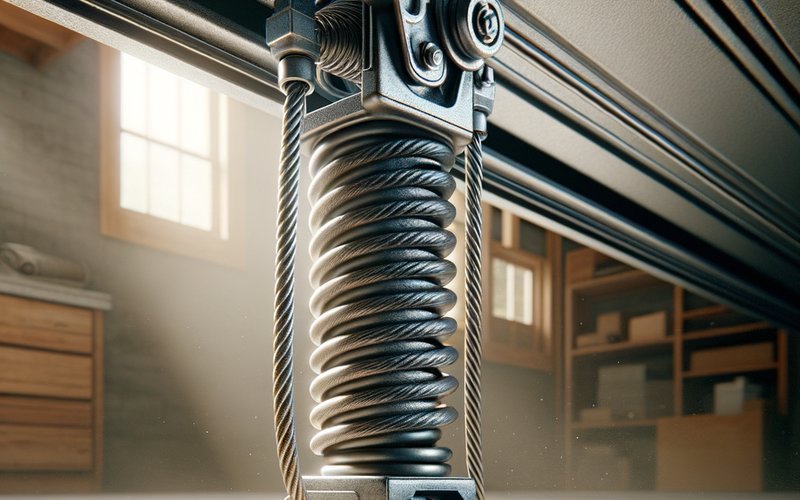
Metal contracts in the cold. Your torsion springs, cables, rollers, and tracks are all steel. When temps drop into the single digits, that metal tightens. Tolerances that were perfectly fine in September become tight spots that cause binding, friction, and wear. A spring that was already slightly fatigued won’t survive a January snap.
And lubrication fails below freezing. Standard garage door lubricants can thicken or stop flowing altogether below 32°F. That means parts that need to glide start grinding instead. A door that operated quietly all summer might suddenly sound like a freight train in December, and that’s not just annoying. It’s a mechanical warning sign.
So what does all this mean practically? It means any minor issue you notice right now, in fall, is going to get significantly worse in winter. A small squeak becomes a broken roller. A slight hesitation becomes a full motor failure in the cold. Catching these signs now costs a fraction of an emergency repair in January.
Sign 1: Slow or No Response When You Hit the Opener
If your garage door takes more than 2 seconds to respond after you press the opener, that’s not normal. A properly functioning door should start moving almost immediately, within about one second of button press.
A delayed response in fall weather usually points to one of three things. First, your opener motor may already be struggling. Cold weakens motor performance, and a motor that’s straining in 40-degree October weather will very likely fail entirely in January. Second, your safety sensors at the bottom of the door tracks can drift out of alignment. Even a small shift causes the system to hesitate as it tries to verify clearance. Third, your batteries may be weak. This sounds basic, but cold dramatically shortens battery life, and a remote that works fine in October may die on you in December.
The sensor alignment issue is worth paying attention to. In Arlington Heights, homes with attached garages see a lot of vibration from the door itself, and over time that can knock sensors slightly off-axis. You might notice a blinking light on the opener or the door reversing before it closes. Both are sensor symptoms.
Don’t ignore a slow response and assume it’ll sort itself out. It won’t. Get it looked at before temperatures drop into the teens.
Sign 2: Grinding or Scraping Noises During Operation
A healthy garage door is not silent, but it also shouldn’t sound like a construction site. Grinding and scraping noises are mechanical distress signals, and they almost always point to something specific.
What Different Noises Actually Mean
Dry or worn rollers are the most common source. Rollers are the small wheels that guide the door along its tracks. When they’re dry, they squeak. When they’re worn, they grind. In Arlington Heights winters, rollers that weren’t lubricated before the cold hits can literally crack from the temperature stress. A set of nylon rollers typically lasts 5 to 7 years; steel ones last longer but need more maintenance.
A scraping sound, especially from near the top of the door movement, often indicates cable fraying. The cables run along each side of the door and take enormous tension loads. Fraying cables make a distinctive metallic scratching noise. This is one of the most dangerous repair situations because a snapped cable under full spring tension can cause serious injury. If you hear that sound, stop using the door and call a technician.
Spring tension issues make a different kind of noise: a deep twanging or popping sound, usually when the door is reversing direction. It can sound almost like a distant gunshot if a spring fully fails. In the Chicago area, torsion spring failures spike every year between December and February, right when temperature swings are most severe.
Sign 3: The Door Closes Unevenly or Jerks on One Side
Watch your door close from inside the garage sometime. It should move in a smooth, level, parallel motion from top to bottom. If one side drops faster than the other, or if the door jerks noticeably during travel, you’ve got a problem that’s going to get worse fast.
Uneven closing is a classic symptom of a broken or fraying cable. Your garage door uses two cables, one on each side. If one is weakened or has snapped, the other side carries the full load and pulls the door off-center. A homeowner in Rolling Meadows once described it as the door “falling” rather than closing, which is exactly what can happen if you keep operating a door in that condition.
Track misalignment can also cause this. If one of your vertical tracks has shifted even slightly, the rollers on that side lose their smooth path. You’ll see it as a hesitation or jerk at a specific point in the travel, usually the same spot every single time. That consistency is actually useful for a technician diagnosing the issue.
But spring imbalance is the most structurally serious cause. Your torsion springs are calibrated to counterbalance the exact weight of your door. If one spring is worn or broken, the opener motor has to compensate for an off-center load. Over time, this can damage the opener itself, turning a $200 spring repair into a $400 spring-plus-opener repair. Fix the spring first.
Sign 4: Visible Rust, Cracks, or Damaged Panels
Physical damage to your garage door panels isn’t just cosmetic. In Arlington Heights winters, damaged panels directly impact your home’s energy efficiency, pest resistance, and overall door function.
Panel gaps let cold air in. A cracked or dented panel that no longer sits flush with its neighbors creates gaps where outside air enters. For an attached garage, that means your living space above or adjacent to the garage loses heat. A well-insulated garage door can keep garage temps 10 to 20 degrees warmer than outside, which matters when it’s -5°F in February.
| Damage Type | Winter Risk | Repair Urgency | Typical Cost Range |
|---|---|---|---|
| Surface rust (minor) | Spreads rapidly in freeze-thaw cycles | Before first freeze | $50–$150 (treatment + sealing) |
| Cracked panel section | Gaps allow cold air and pests inside | High — fix now | $200–$500 per panel |
| Dented panel (structural) | Misalignment worsens in cold | Medium-high | $150–$400 per panel |
| Full panel replacement | Restore insulation value and seal | Before winter | $250–$800 per panel |
| Full door replacement | Multiple failed panels, aging door | Assess with pro | $800–$3,500+ installed |
Rust spreads fast in winter. The freeze-thaw cycle forces water into even tiny rust spots, expanding them and accelerating deterioration. A small rust patch in October can compromise an entire panel section by March. If you’re seeing rust on the exterior, treat it now with a rust-inhibiting primer and touch-up paint before temperatures drop.
The insulation value drop is real and measurable. Most modern steel garage doors have an R-value between R-6 and R-18. Damaged panels compromise that rating. If your heating bills spike every winter, your garage door may be part of the reason why.
Sign 5: The Door Won’t Stay Closed or Seals Poorly
If you can see daylight under or around your closed garage door, cold air and pests can definitely get through. Poor sealing is one of the most overlooked garage door problems, and in a Chicago winter, it’s a serious comfort and energy issue.
Weatherstripping failure is the most common culprit. The rubber seals along the sides and top of the door frame crack and stiffen with age. Once they lose flexibility, they can’t conform to the door surface properly, leaving gaps. In Arlington Heights, where temperatures can swing 40 degrees in a single day, that cracking accelerates. Replacing weatherstripping is relatively cheap, usually $50 to $150 for materials if you do it yourself, or $100 to $200 installed.
The bottom seal gets the worst of it. That rubber flap along the door’s bottom edge sits directly on the concrete floor. Over time, it flattens, cracks, and pulls away from the door. A failed bottom seal is an open invitation to mice looking for winter shelter. And if you live near Buffalo Grove Road or any area with significant wildlife pressure, rodent intrusion through a failed seal is not hypothetical. It happens.
Sometimes the door itself won’t stay fully closed because of an opener force adjustment issue. If the opener’s sensitivity is set too high, it may detect slight resistance from a stiff seal and reverse the door back up. This is adjustable, but it’s worth having a technician verify the setting so you’re not accidentally bypassing a legitimate safety trigger.
What These Repairs Cost in the Arlington Heights Area
So what does this actually cost? Repair pricing in the Chicago northwest suburbs is fairly consistent, though emergency service calls and winter conditions can push prices higher. Here’s a realistic breakdown of what Arlington Heights homeowners typically pay.
| Repair Type | Typical Cost Range | Notes |
|---|---|---|
| Torsion spring replacement (single) | $150–$280 | Always replace both springs at same time |
| Torsion spring replacement (pair) | $220–$350 | Labor included; most techs recommend this |
| Cable repair or replacement | $100–$250 | Often done same-day; replace both cables |
| Roller replacement (full set) | $95–$175 | Nylon rollers quieter; steel more durable |
| Track realignment | $125–$200 | Often paired with roller service |
| Panel replacement (per panel) | $200–$800 | Price varies by door material and style |
| Opener motor replacement | $200–$450 | Belt drive typically costs more than chain |
| Weatherstripping replacement | $100–$200 | Full perimeter seal replacement |
| Emergency winter service call | $75–$150 surcharge | On top of repair cost; varies by provider |
Honestly, the spring repair cost is where a lot of homeowners get surprised. Many people assume it’ll be a quick $50 fix. It’s not. Springs are under extreme tension and require specialized tools and training to replace safely. The labor cost is real and justified. Trying to replace a torsion spring yourself without training is genuinely one of the most dangerous home repair mistakes you can make.
If you’re looking at multiple issues at once, bundling repairs is usually smarter than scheduling separate visits. Ask your technician to do a full safety inspection while they’re there. In Arlington Heights, most reputable companies offer a free or low-cost inspection ($25 to $50) that gets applied to the repair cost if you proceed.
For reliable garage door repair chicago services that cover the Arlington Heights area, Fairway Garage Door has built a solid reputation for transparent pricing and same-day availability on most standard repairs.
What to Do Before the First Hard Freeze Hits
In Arlington Heights, the first serious freeze typically hits sometime between late October and mid-November. That gives you a limited window to address any of these warning signs before cold weather turns minor repairs into major emergencies. Here’s how to use that time well.
Schedule a Fall Inspection Now
A professional garage door inspection takes about 30 to 45 minutes and covers every component: springs, cables, rollers, tracks, opener force, sensor alignment, weatherstripping, and panel condition. Most garage door specialists in Arlington Heights can get you scheduled within a few days during fall, before the winter rush hits. Once December arrives and doors start failing across the northwest suburbs, wait times for non-emergency service can stretch to a week or more.
Lubricate All Moving Parts Yourself
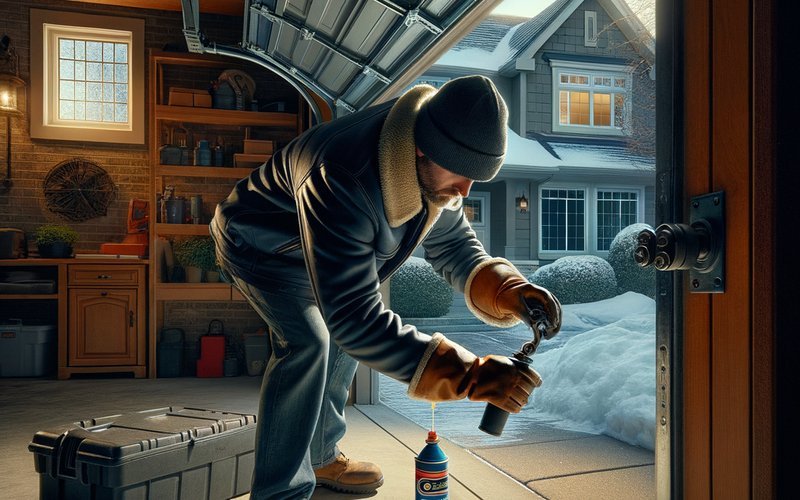
You can do this one yourself. Pick up a can of white lithium grease or a purpose-made garage door lubricant like Blaster or 3-IN-ONE Garage Door Lube. Do not use WD-40. It’s a solvent, not a lubricant, and it will actually strip the grease off your components.
- Apply lubricant to all rollers (not the tracks themselves)
- Spray the torsion spring coils lightly along the length
- Lubricate the hinges where they pivot
- Apply a thin coat to the top section of each cable
- Wipe off any excess to prevent dripping onto the floor
Do this once in October and again in January. It takes about 10 minutes and can genuinely extend the life of your components through a full winter season.
Know Who to Call for Emergencies
Even if you do everything right, a spring or cable can still snap in January. Knowing who to call before it happens saves you from panicking and making a bad hiring decision at 6 a.m. on a frozen morning. Look for companies in the Arlington Heights area that explicitly advertise 24/7 emergency garage door service and serve the northwest Chicago suburbs. Check that they’re licensed and insured in Illinois, and get a written estimate before any work begins.
For more on what can go wrong with garage doors in Chicago-area homes, especially older properties, the resource on common garage door problems in Chicago and how to fix them covers a lot of the same failure patterns in detail.
The bottom line is simple. Garage door problems in Chicago winters rarely appear from nowhere. They build up over months, showing signs that are easy to spot if you know what to watch for. A slow response, grinding noises, uneven closing, visible panel damage, or poor sealing are all telling you the same thing: handle this now, before February handles it for you.