
If you’ve searched for garage door repair Chicago two-flat greystone owners rely on, you already know that search often leads you to the wrong contractors — ones used to suburban cookie-cutter setups, not older masonry structures. A detached brick garage accessed from the alley in Arlington Heights doesn’t behave like the garages in hardware store ads. Standard repair quotes don’t apply. The hardware often doesn’t fit. And a tech who shows up without the right parts for a low-headroom masonry situation will charge you twice. Here’s what actually goes wrong with these older structures, what repairs cost in Arlington Heights specifically, and how to avoid paying for a second service call.
Ready to get a quote from someone who actually knows these older garages? Get a free estimate from a licensed Arlington Heights contractor before you book anyone.
Why Do Old Chicago-Style Garages Cause So Many Repair Headaches in Arlington Heights?
Pre-1950s detached brick garages in Arlington Heights were built for a different era of hardware. They’re common in older pockets of the village, particularly in the Heritage neighborhood and the blocks surrounding Downtown Arlington Heights near Vail Avenue. These structures weren’t designed with modern garage door systems in mind, and that mismatch is the root of almost every repair headache.
The three problems show up on nearly every job. First, headroom. Many of these garages have as little as 2–4 inches above the door opening, which means a standard torsion bar assembly physically won’t fit. Techs who don’t carry low-headroom torsion conversion kits on the truck will either leave or try to force hardware that won’t work long-term.
Second, the opening width. A lot of these garages were built with 9-foot masonry openings, which falls between standard stock sizes. You can’t just order a 9-ft door off a shelf. It requires a custom or semi-custom panel, which adds lead time and cost.
Third, the jambs. These aren’t wood-framed walls. They’re brick or limestone block, and you can’t anchor a track the same way. Lag bolts pull out of mortar joints. The right approach is through-bolts or specialty masonry anchors, and not every tech carries them.
A homeowner near Downtown Arlington Heights recently called for a garage door repair on a brick alley garage with a 9-ft wide masonry opening. There was no room for a standard torsion bar, the side jambs were solid limestone, and the wood lintel above the opening had deflected nearly an inch over decades, causing the door to rack every time it opened. The first tech who came out didn’t carry a low-headroom conversion kit and had to reschedule. The right repair required a low-headroom torsion conversion, through-bolt masonry anchoring, and a custom-width door panel. Total cost: $1,100. A second trip charge added another $95 that could have been avoided entirely.
This is the pattern with garage door repair on Chicago two-flat and greystone-era structures. Standard approaches fail. The right tech knows that before they pull into the alley.
What Does Garage Door Repair Actually Cost for an Older Alley-Access Garage in Arlington Heights?
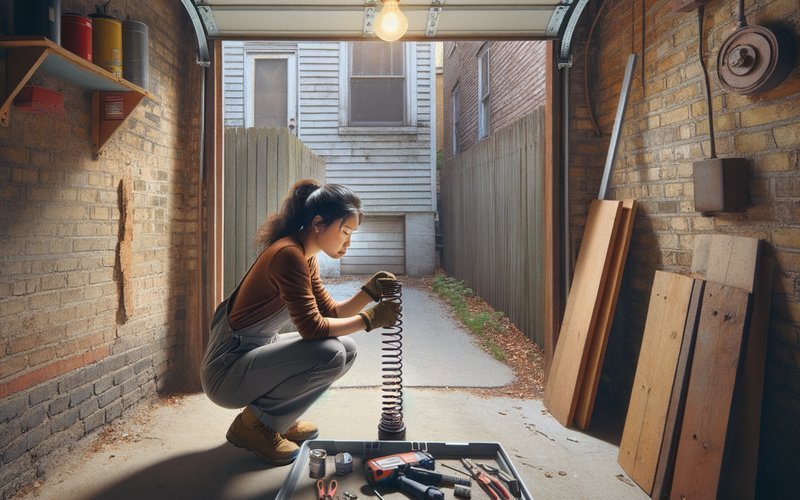
Costs for older alley-access garage door repair in Arlington Heights run consistently higher than standard flat-rate pricing. Masonry anchoring, custom hardware, and low-headroom components all add to the base rate. Expect 20–35% above standard quotes across most job types.
| Repair Type | Standard Modern Garage | Older Alley-Access / Masonry Garage | Notes |
|---|---|---|---|
| Broken torsion spring (low-headroom setup) | $180–$290 | $220–$380 | Requires low-headroom conversion hardware; spring must be sized to actual door weight |
| Cable replacement (wood-framed jamb) | $140–$240 | $180–$310 | Corroded anchor points add labor; may need drum replacement |
| Track realignment (masonry wall) | $110–$190 | $150–$260 | Through-bolt anchoring required; mortar patching may be extra |
| Full panel replacement (non-standard width) | $290–$520 | $480–$850 | Custom or semi-custom panel required; 1–3 week lead time typical |
| Emergency service add-on | $75–$125 | $75–$150 | After-hours or same-day calls on older structures often cost more due to parts availability |
Honestly, any company giving you a flat spring price over the phone without asking your door weight, spring type, or whether the jambs are masonry is quoting a standard job. If you’ve got an older brick garage, that quote will change when they arrive. Ask upfront. For more on how garage door repair costs break down in the Chicago area, that pricing guide covers the variables in detail.
What Makes Alley-Access Garages in Arlington Heights Structurally Different From Modern Builds?
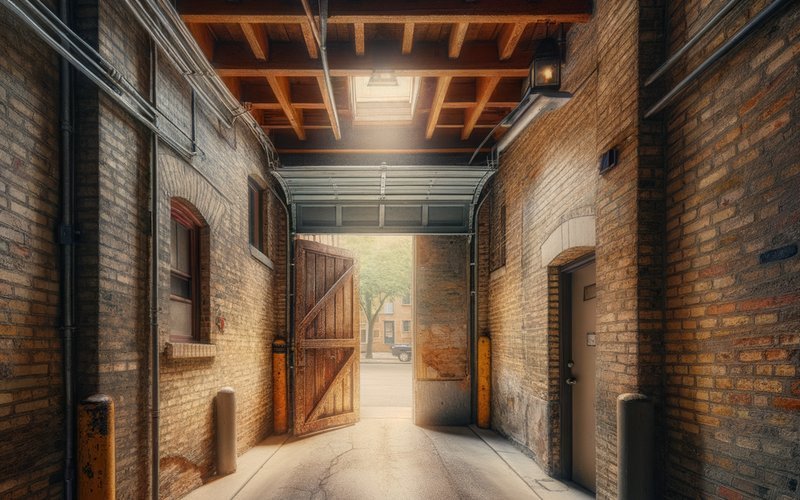
Low Headroom
Modern garage door systems assume at least 10–12 inches of clearance above the door for a standard torsion spring assembly. Older alley-access garages in Arlington Heights, especially in the Heritage neighborhood and the older blocks near Vail Avenue, often have only 2–4 inches of clearance. That’s not enough for a standard torsion bar. The fix is a low-headroom torsion conversion kit, which repositions the spring mechanism to work within that constraint. Not every tech stocks them. Ask before they drive out.
Non-Standard Opening Widths
These garages were built before the industry standardized on 8-ft and 9-ft door widths. Many openings measure 8.5 ft or 9.5 ft, which puts them squarely between standard stock sizes. Replacing a panel or a full door means going custom or semi-custom. Lead times of 1–3 weeks are typical. And the cost jumps. A stock 9-ft door might run $400–$600 installed. A 9.5-ft custom door in the same style starts around $650 and can reach $1,100 or more depending on the material.
Masonry Side Jambs and Rotting Lintels
Wood-framed walls accept lag bolts. Brick, limestone, and concrete block don’t. Tracks anchored with standard lag bolts into mortar joints will pull free under normal cycling. Through-bolts or specialty masonry anchors are the right call, and they cost more to install. Beyond the jambs, the wood lintel above the opening is often the hidden culprit. Decades of moisture and load cause it to rot and deflect, which makes the door frame out of square. When the frame racks, cables jump off drums and panels gap unevenly. If you’re seeing recurring track or cable issues on an older structure, check the lintel before replacing parts.
Do You Need a Permit for Garage Door Repair or Replacement in Arlington Heights?
In Arlington Heights, permit requirements for garage door work are handled by the Village of Arlington Heights Community Development Department, Building Division. Spring repairs and cable replacements don’t require a permit. But the moment you’re altering the structural header or running a new electrical circuit, the rules change.
| Job Type | Permit Required? | Notes |
|---|---|---|
| Spring repair (torsion or extension) | No | Maintenance work, no structural change |
| Cable repair or replacement | No | No permit needed |
| Full door replacement (masonry opening, header altered) | Yes | Triggers header inspection when structural framing is modified |
| New opener installation (new electrical circuit) | Yes | New circuit requires electrical permit through Building Division |
| Panel replacement only (no structural work) | No | Cosmetic/mechanical only, no permit required |
Permit fees for residential garage door replacement in Arlington Heights typically run $50–$120. If your older masonry garage needs a header repair or replacement as part of the door job — which is common when the lintel has deflected — budget for the permit and a scheduled inspection. Skipping it isn’t worth the risk if you sell the house later. Contact the Village of Arlington Heights Building Division directly at Village Hall if you’re unsure whether your specific scope triggers a permit.
Spring Repair and Cable Failures: Why Older Garage Setups Break Differently
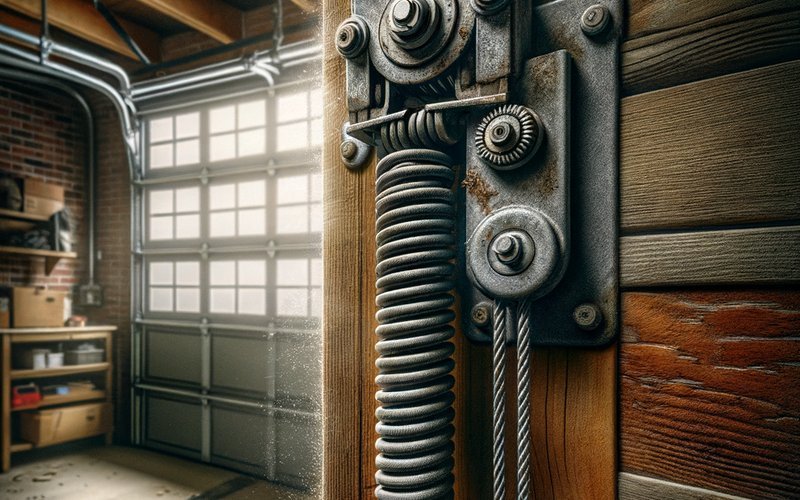
Older alley-access garages in Arlington Heights often still run extension springs rather than torsion springs. That’s not always a mistake made during a previous repair. It’s frequently because the original structure had so little header clearance that torsion hardware was never an option. Extension springs run along the horizontal track sections on each side of the door, and they work fine when sized correctly. The problem is they’re often not.
Extension springs have to be matched to door weight. Standard springs from a supply house are rated for doors in a normal weight range, typically 100–130 lbs. Old wood carriage-style doors, which are still common on these structures, can weigh 140–180 lbs or more. A spring undersized for the actual door weight will snap faster. Sometimes in under 18 months.
A homeowner near the Heritage neighborhood experienced exactly this. Their custom wood carriage door weighed close to 140 lbs, but the spring installed during a previous repair was sized for a standard steel door. It snapped after less than a year and a half of daily use. The fix wasn’t just replacing the spring. It required sourcing a correctly rated heavy-duty extension spring and, ultimately, a full conversion to a low-headroom torsion setup to handle the door weight properly.
Cable problems compound this. Alley exposure means more humidity, more grit, and more temperature swings than an attached garage ever sees. Concrete floors without any sealant cause cable loop anchors and bottom brackets to rust through over time. If your cable anchor point is corroded, replacing the cable without replacing the anchor hardware is a short-term fix that’ll fail again.
Can You Install a Modern Garage Door Opener on an Old Alley-Access Garage in Arlington Heights?
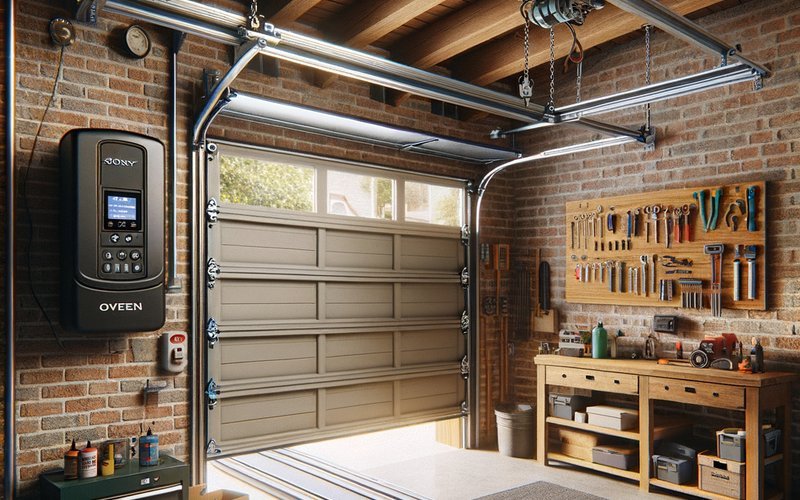
You can. But there are three obstacles that show up consistently on older alley-access garages, and each one adds cost and complexity.
The first is power. Many of these detached garages were built without a dedicated outlet, or the wiring is so old it can’t safely support a modern opener. An electrician needs to run a circuit before any opener gets installed. Budget $180–$320 for that work, depending on the distance from the panel and whether conduit is required in the alley structure.
The second is headroom. A standard rail-and-trolley opener needs clearance above the door to mount the rail at the right angle. With only 2–4 inches of headroom, that’s not possible. The solution is a jackshaft or side-mount opener, which mounts directly to the torsion bar shaft on the wall beside the door rather than on a ceiling rail. These work well in low-headroom situations and run $420–$680 installed, a bit more than a standard rail opener but worth it for the fit.
The third obstacle is door weight. Standard openers are rated for doors up to around 130 lbs. A heavy wood carriage door can exceed that. If the door is too heavy, the opener motor will strain, overheat, and fail within a year. Sometimes the honest answer is that the old wood door needs to go before an opener makes sense. A full door and opener package on a non-standard masonry opening typically runs $1,200–$2,200 depending on door style and materials. That’s more upfront, but it’s less than a failed opener plus a door replacement six months later.
If you want to understand whether repair or replacement makes more financial sense for an older structure, that comparison covers the decision points clearly.
What Should Arlington Heights Homeowners Do Before Calling a Garage Door Tech for an Old Structure?
Five minutes of prep before you make the call can save you a second trip charge and a lot of frustration. Here’s what to do and why it matters for garage door repair on a Chicago two-flat or greystone-era structure.
- Measure the rough opening. Grab a tape measure and go into the alley. Write down the exact width and height of the masonry opening, not the door size. These are often different.
- Identify the jamb material. Wood or masonry? Run your hand along the sides of the opening. Brick and block feel solid and cold. Wood framing will flex slightly. This determines what anchor hardware the tech needs to bring.
- Check for power. Is there a working outlet in the garage? If not, the tech will need to know before they try to install or test an opener.
- Photograph the spring setup. A torsion bar runs horizontally across the top of the door opening. Extension springs run along the sides of the tracks. Send the photo with your inquiry. It tells the tech exactly what hardware they need before arrival.
- Note the door material. Steel, wood, or composite? Heavy wood carriage doors require different spring sizing and may affect opener compatibility.
This matters because a tech who arrives at a masonry low-headroom garage without the right conversion hardware or masonry anchors will either leave or improvise. Neither outcome is good. Sending these details ahead of time lets the right tech show up with the right truck. For older structures specifically, that’s the difference between a one-visit fix and a two-visit billing situation.
If you’d like an accurate quote for your specific garage setup, get in touch with a team that specializes in professional garage door repair chicago homeowners in older structures rely on, before scheduling anyone who quotes without asking these questions.
How to Choose the Right Garage Door Repair Company for an Older Arlington Heights Garage
Not every garage door company is equipped for pre-1950s alley-access work. The gap between a general residential contractor and a tech who actually knows older masonry garages is real, and it shows up in the quality of the repair.
Ask these three questions before you book anyone:
- Do you carry low-headroom torsion conversion hardware on the truck? If they hesitate or say they’ll “check on availability,” that’s your answer. A tech set up for this work keeps it stocked.
- Have you done masonry jamb installs before? Ask specifically about through-bolting into brick or limestone. The answer reveals whether they understand why lag bolts fail in mortar.
- Can you source non-standard door widths, or do you sub that out? Companies that handle custom sizing in-house have shorter lead times and fewer miscommunication issues than those who rely on third-party fabricators for every non-stock panel.
Red flags are straightforward. Any tech who quotes a spring price over the phone without asking about door weight, spring type, or headroom clearance is quoting a standard job. They’ll adjust when they arrive. Any company unwilling to answer those three questions before booking isn’t the right fit for an older structure.
Homeowners dealing with non-standard older garages in Arlington Heights, particularly in the Heritage neighborhood and around Downtown near Vail Avenue, need a company that treats these structures as the specialty work they are. Knowing how quickly a tech can actually reach you in Arlington Heights is also worth checking before you’re stuck with a broken door on a cold morning. Call a company that asks the right questions first. You’ll get a one-trip fix instead of a two-trip bill.