
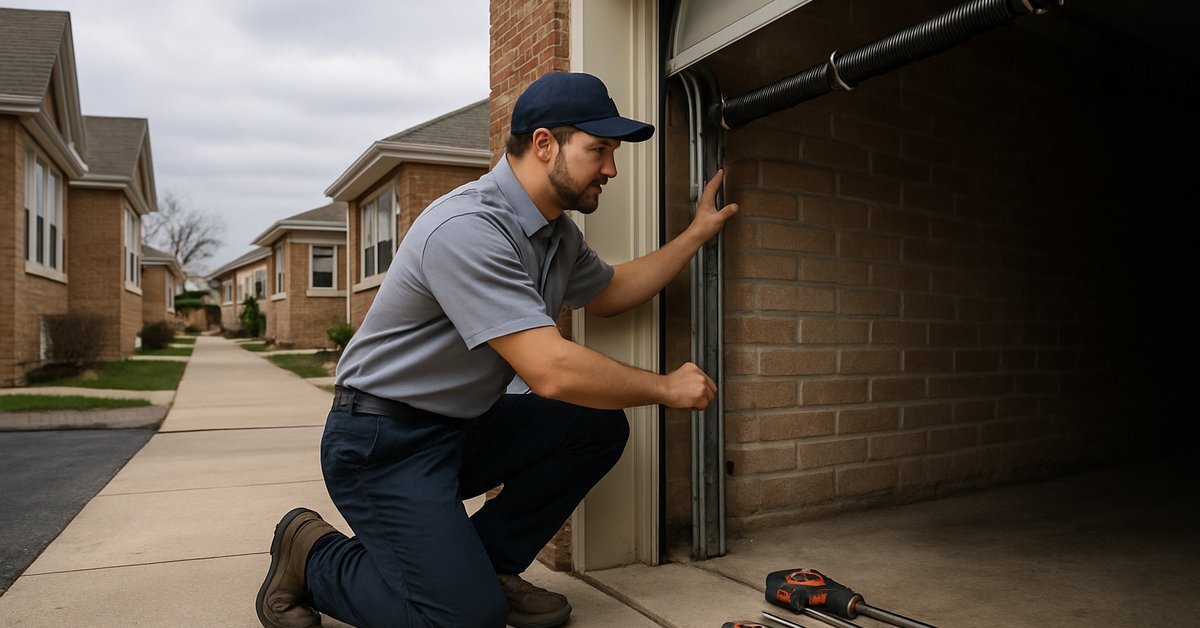
Your garage door just failed, and you need someone in Chicago who actually knows what they’re doing. A standard spring repair runs $180–$350, a cable replacement lands around $150–$280, and a full residential installation can reach $800–$2,500 depending on the door and opener you choose. Chicago’s climate is brutal on garage hardware — freeze-thaw cycles crack torsion springs faster than almost anywhere in the country. This guide walks you through every service, real costs, permit requirements, and exactly what separates a trustworthy local company from one that’ll pad your bill. Ready to get an accurate number? Get a free estimate from a licensed Chicago contractor before you commit to anything.
What Services Does a Chicago Garage Door Company Actually Cover?
A full-service Chicago garage repair company handles far more than a stuck door. The full service list typically includes garage door installation (residential and commercial), spring repair, cable repair, panel replacement, opener installation, off-track repair, roller replacement, and emergency same-day calls. Most reputable companies also offer maintenance tuneups that can prevent the expensive failures Chicago winters trigger.
Spring repair is the most common call. Torsion springs above the door and extension springs along the sides both fail under heavy use, and Chicago’s temperature swings from -10°F to 95°F put enormous stress on the metal. When a spring snaps, the door won’t move — and attempting to force it can damage the opener or derail the door entirely.
Cable repairs come in second. Cables work in tandem with springs to lift and lower the door evenly. A frayed or snapped cable causes the door to drop on one side, which looks alarming but is usually fixable in under an hour by a trained tech.
Panel replacement is worth knowing about separately. If a car backs into a lower panel or weather damage dents one section, you don’t always need a whole new door. A single panel swap can restore appearance and function for a fraction of full replacement cost — as long as the manufacturer still makes a matching panel for your door model.
And then there’s emergency garage door repair, which is its own category. If your door is stuck open at 11 p.m. in February, you need someone fast. Most Chicago companies that advertise 24-hour service will actually send a tech within 1–3 hours, though response time varies by neighborhood and time of night.
How Much Does Garage Door Repair Cost in Chicago Right Now?
In Chicago, garage door repair costs range from $95 for a basic service call up to $1,800+ for complex commercial work. The table below breaks down the most common jobs with realistic price ranges — not the lowball numbers you see on some ads, and not inflated worst-case estimates either.
| Service | Typical Chicago Cost Range | Average Time to Complete |
|---|---|---|
| Spring Repair (torsion, single) | $180–$350 | 45–90 minutes |
| Spring Repair (torsion, double) | $280–$500 | 60–120 minutes |
| Cable Repair | $150–$280 | 30–60 minutes |
| Panel Replacement (single panel) | $250–$600 | 1–3 hours |
| Opener Installation | $300–$550 (parts + labor) | 1–2 hours |
| Off-Track Repair | $125–$250 | 30–75 minutes |
| Full Residential Door + Installation | $800–$2,500 | 3–6 hours |
| Emergency After-Hours Service Fee | $75–$150 surcharge | Varies |
| Annual Maintenance Tuneup | $95–$175 | 45–60 minutes |
A homeowner in Pilsen recently had both torsion springs replaced plus a cable swap done in the same visit for $520 total. The tech bundled the labor since everything was accessible at once — that’s a real saving you can ask about if you have multiple issues.
Honestly, the biggest cost variable isn’t the parts — it’s whether the company charges a flat rate or separates labor and parts. Ask before they start. Flat-rate pricing is usually more predictable and easier to compare across quotes. If a company won’t give you a number before they show up, that’s a red flag.
If you want a detailed breakdown of what drives these prices up or down, this Chicago garage door repair cost guide goes deeper on materials, labor rates, and when costs spike.
Which Chicago Neighborhoods See the Most Garage Door Calls — and Why?
Neighborhoods with older housing stock and alley-access garages generate the highest call volume in Chicago. Wicker Park, Pilsen, and Edgewater all fit that profile — dense blocks of bungalows and two-flats built between 1910 and 1950, with detached garages that have seen decades of deferred maintenance.
In Wicker Park, the combination of century-old garages and heavy street parking pressure means homeowners depend on their garage more than in newer suburbs. When the door fails, there’s often no alternative parking. That urgency drives a lot of same-day and emergency calls from this neighborhood.
Pilsen’s garages are often shared between units in two-flat and three-flat buildings. That means more frequent use, faster wear on springs and rollers, and sometimes disagreements between tenants or landlords about who pays. The door hardware itself isn’t different — but the usage pattern is heavier, and the average spring lifespan shortens to 4–6 years instead of the typical 7–10 years in a single-family home.
Edgewater sits on the north lakefront, and the wind exposure there is real. Doors that face north or east take more weather punishment than interior-facing doors. Salt air from Lake Michigan accelerates rust on springs, cables, and hinges. A yearly lubrication and inspection matters more in Edgewater than it does in a sheltered interior neighborhood.
And Chicago’s alley system itself plays a role everywhere. Alley-access garages are often tighter, meaning door clearance is minimal and a slightly bent track or off-track panel causes immediate problems. If your garage opens to an alley and the door is acting up, off-track repair is usually the first thing to check.
New Garage Door Installation in Chicago: Residential vs. Commercial — What’s Different?
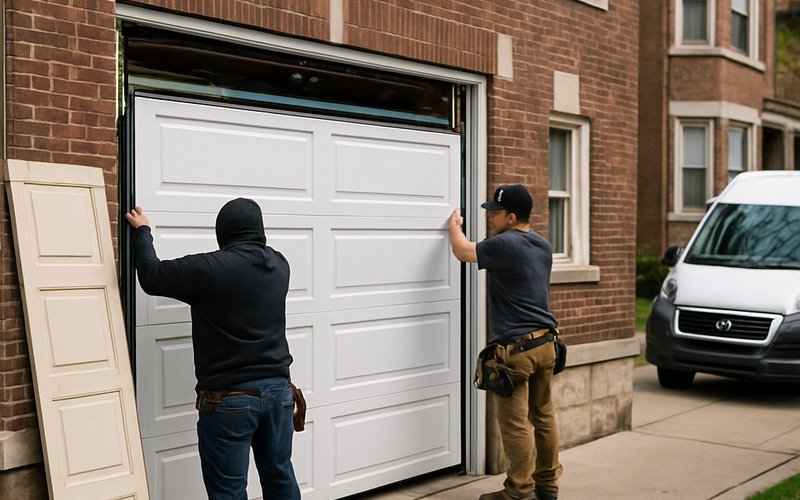
Residential and commercial garage door installations in Chicago differ significantly in door weight, cycle rating, hardware requirements, and — often — permit complexity. Getting the wrong type of door for your structure is a costly mistake.
| Factor | Residential Installation | Commercial Installation |
|---|---|---|
| Typical Door Weight | 100–200 lbs | 200–600+ lbs |
| Cycle Rating (daily uses) | 3–6 cycles/day | 20–100+ cycles/day |
| Opener Type | Belt, chain, or screw drive | Jackshaft, trolley, or industrial |
| Installation Time | 3–6 hours | 1–3 days |
| Typical Cost Range | $800–$2,500 | $2,500–$10,000+ |
| Permit Usually Required? | Sometimes (new structure) | Almost always |
For a residential installation, your biggest decision is material: steel is the most popular in Chicago because it handles temperature swings well and holds insulation better than wood. Insulated steel doors with a R-value of 12–18 are worth the extra $200–$400 in Chicago winters — you’ll feel the difference in your garage and any room above it.
Commercial jobs require heavier spring systems, higher-cycle openers, and often a separate electrical connection. If you’re outfitting a retail bay, restaurant service entrance, or storage facility, the planning timeline alone adds 2–4 weeks before installation even begins. Don’t underestimate that lead time when scheduling.
Do You Need a Permit for Garage Door Work in Chicago?
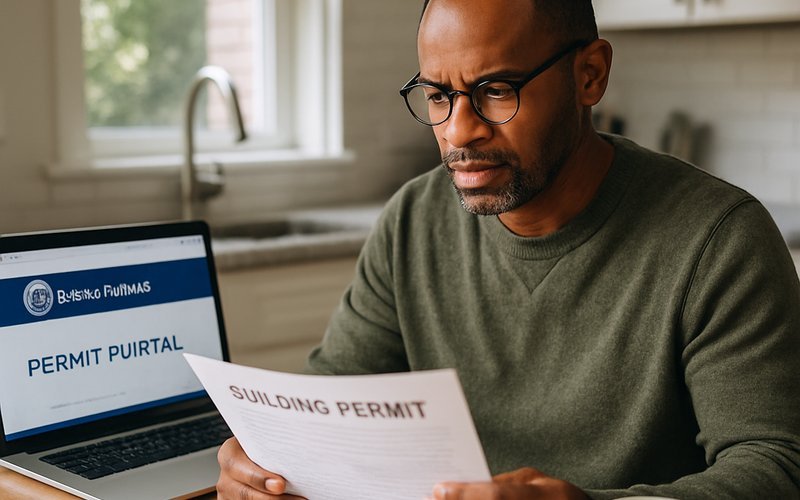
In Chicago, most garage door repairs don’t require a permit — but installations involving structural changes or new construction do. The City of Chicago Department of Buildings is the authority here, and their guidelines are specific.
Replacing a door in an existing opening with a like-for-like door? No permit needed in most cases. But if you’re widening the opening, building a new garage, or changing the door type as part of a larger renovation, you’ll need to pull a building permit through the City of Chicago Department of Buildings. Their permit portal is accessible online, and residential permits for garage work typically run $75–$300 and take 2–6 weeks for approval, though expedited review is available for an additional fee.
For a deeper look at exactly when a permit is and isn’t required for Chicago garage work, this permit guide for Chicago garage door work covers the specific thresholds clearly. If your contractor tells you permits are never needed for any garage door work, that’s worth questioning.
Want Something Beyond Standard? Custom Garage Doors in Chicago
Custom garage doors are a growing request in Chicago, especially in neighborhoods where homes have unique architectural character. Not every door comes off a standard production line — and sometimes that’s exactly what a property needs.
A homeowner in Edgewater with a 1920s craftsman bungalow recently commissioned a carriage-style door with custom cedar overlays and black powder-coated hardware. The finished cost was around $3,800 installed — more than a stock door, but it matched the home’s facade and added real curb appeal that standard steel panels couldn’t replicate.
Custom options include faux wood overlays, full-view aluminum and glass panels, arched tops for non-standard openings, and custom color matching to historic paint schemes. Lead times for custom work run 4–8 weeks from order to installation, so it’s not for emergencies — but for a planned renovation or new construction, the result is genuinely different.
If you want to see what’s actually possible for a Chicago home, Fairway Garage Door’s custom garage door options for Chicago show the range of styles, materials, and finishes available locally. The design process starts with a site measurement, so dimensions and structural constraints shape the options from the beginning.
How Do You Choose the Right Garage Door Company in Chicago?
Before you hire anyone for garage repair near me searches in Chicago, check three things: Illinois state licensing (look for a valid contractor registration), verifiable local reviews from Chicago addresses, and a written estimate before any work starts. Those three filters eliminate most of the bad actors.
Ask specifically whether the company stocks common parts on their truck. A tech who shows up for a spring repair without springs wastes your time and often charges a return-visit fee. A company that runs fully stocked service vehicles can complete most jobs in a single visit — that’s the standard you should expect.
Response time matters too. For non-emergency calls, a good Chicago company should be able to schedule you within 24–48 hours. For emergencies, ask what their actual after-hours response guarantee is — not just “we’re available,” but how long until a tech arrives.
The cheaper option isn’t always wrong. But the cheapest quote often reflects cheaper parts, not more efficient labor. Springs rated for 10,000 cycles cost less than those rated for 25,000 cycles — and the company quoting you the lowest number might be spec’ing the lower-grade hardware. Ask what cycle rating the springs carry. That one question tells you a lot about how a company operates.
For more guidance on spotting overcharges and finding a company worth trusting, this guide on finding a trustworthy Chicago garage door repair company covers the right questions to ask before you book. And when you’re ready for a real quote, reach out to Fairway Garage Door — a licensed Chicago contractor with stocked vehicles and same-day availability on most calls. Don’t leave your garage unsecured any longer than you have to.