
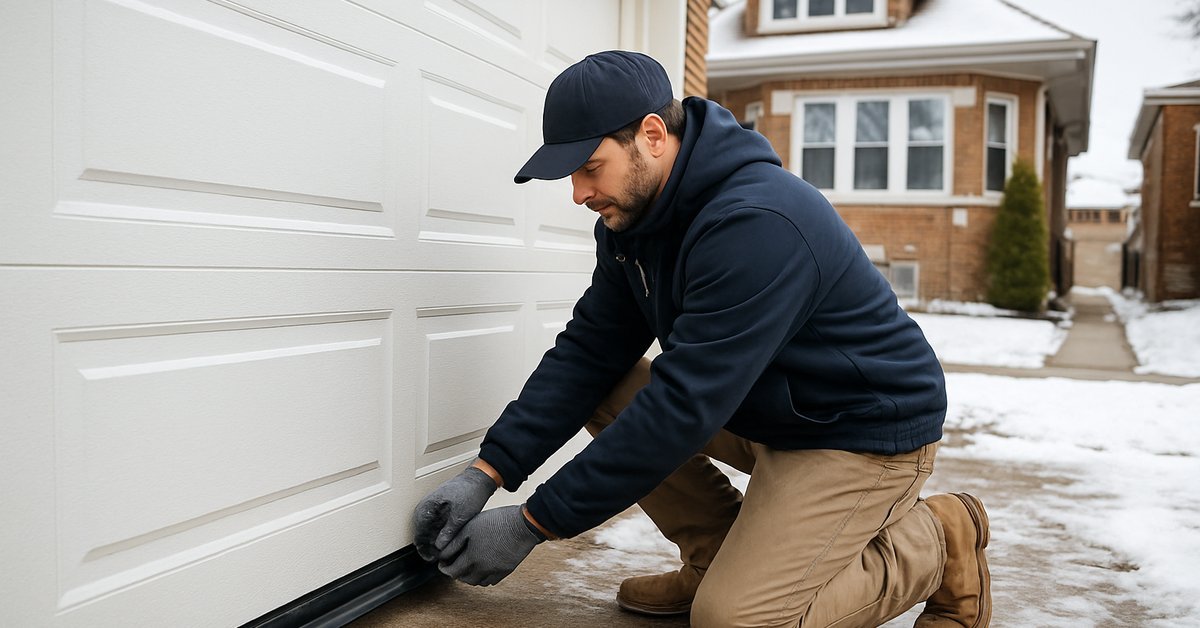
Chicago winters don’t give your garage door a pass. Garage weatherproofing is one of the highest-return maintenance tasks a Chicago homeowner can do, and most people wait too long to do it. A full weatherproofing service, including bottom seal, threshold, and side and top weatherstripping, runs $150–$600 installed, depending on door size and condition. Chicago’s climate accelerates seal degradation faster than most U.S. cities, meaning a seal that lasts five years in Phoenix might crack and split in two Chicago winters. This guide covers exactly what’s included, what it costs, which neighborhoods have the most urgent need, and when your door needs repairs before weatherproofing will even work. Get a free estimate from a licensed Chicago contractor before the next cold snap hits.
What Does Garage Weatherproofing Actually Include?
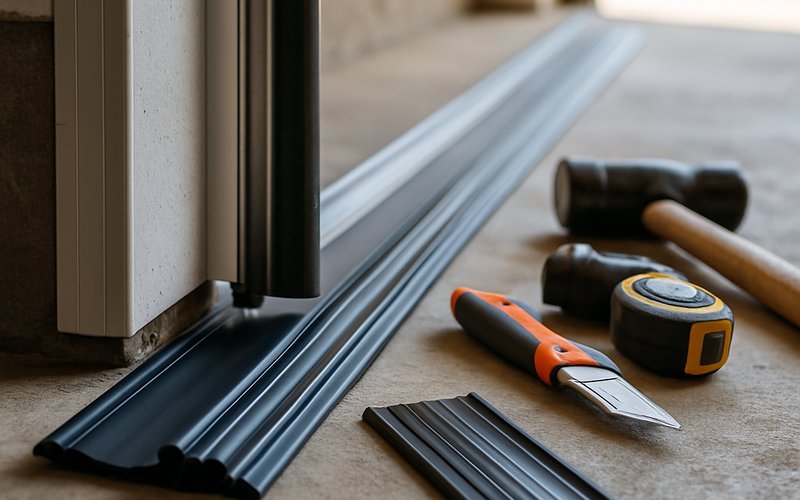
Garage weatherproofing covers every seal and barrier that keeps outside air, water, pests, and debris from entering your garage through gaps around the door. It’s not just one product. It’s a system of four components working together.
The bottom seal (also called the door sweep) runs along the bottom edge of the door panel and compresses against the floor when the door closes. It takes the most abuse of any seal, especially in Chicago where ice can bond it to the floor overnight. The threshold seal sits on the garage floor itself, creating a second barrier that fills gaps caused by uneven concrete slabs, which are extremely common in older Chicago homes.
The side and top weatherstripping lines the inside of the door frame on three sides. This vinyl or rubber strip compresses when the door is in the closed position and stops wind from pushing through the side gaps. On older Chicago garages, this is often the first seal to crack.
Finally, door panel insulation is sometimes added at the same time. This is especially relevant in Chicago two-flats and coach house garages where the space above the garage is conditioned living space. Insulating the door reduces heat transfer dramatically. Honestly, most contractors separate weatherstripping and insulation as two different line items on a quote, so be clear about which you’re asking for.
How Much Does Garage Weatherproofing Cost in Chicago?
In Chicago, garage weatherproofing costs depend on door width, seal material quality, and whether any carpentry repairs to the door frame are needed first. Here’s a realistic breakdown for most residential jobs.
| Service | Single Door (8–9 ft) | Double Door (16–18 ft) | Notes |
|---|---|---|---|
| Bottom seal replacement | $60–$120 | $90–$160 | T-style or bulb seal, labor included |
| Threshold seal installation | $80–$150 | $120–$200 | Adhesive-bonded to concrete floor |
| Side and top weatherstripping | $75–$130 | $100–$180 | Vinyl or rubber stop molding |
| Full weatherproofing package | $180–$340 | $280–$600 | All seals replaced in one visit |
| Door panel insulation (add-on) | $120–$250 | $200–$400 | Polystyrene or reflective foil kits |
A homeowner in Bridgeport recently had a full weatherproofing package done on a 16-foot double door, including a new threshold seal over a concrete floor that had settled unevenly over several decades. The total came to $420, which included a door frame repair on the right side where the stop molding had rotted from years of snow contact. That frame repair added about $80 to an otherwise standard job.
So what drives prices up? Frame rot, uneven floors, and non-standard door dimensions are the big three cost drivers in Chicago. If your garage was built before 1970, budget toward the higher end of any range you see. See the full Chicago garage door repair cost guide for a broader breakdown of what to expect.
Why Chicago’s Climate Makes Weatherproofing Non-Negotiable
Chicago averages more than 35 freeze-thaw cycles per year, and that number is the enemy of every rubber and vinyl seal on your garage door. Each time temperatures drop below freezing and then climb back above it, seals expand and contract. Over time, they crack, harden, and pull away from the surfaces they’re meant to compress against.
Wind is the other factor. Chicago’s lakefront and flat terrain mean sustained winds of 15–25 mph are routine in winter, with gusts regularly hitting 40 mph or higher. A side seal with even a small gap lets that wind force cold air directly into the garage. If your garage shares a wall with your home, that cold air enters your living space too.
Water intrusion is the third issue. Snowmelt and ice melt run directly under garage doors with failed bottom seals or absent threshold seals. In older Chicago homes with wood framing at the sill level, repeated water contact leads to rot. That rot means the door frame itself eventually needs replacement, which is a much more expensive repair than just replacing a $40 seal every two to three years.
And there’s a safety dimension. Cold weather can affect your garage door opener directly, causing sluggish motor response or sensor issues. If your opener is already struggling, weatherproofing the door reduces the thermal stress on the entire system. Read more about garage door opener repair if your opener is behaving erratically in cold weather, since weatherproofing alone won’t fix a motor or logic board problem.
Which Chicago Neighborhoods Need Weatherproofing Most Urgently?
Certain Chicago neighborhoods have structural and housing-stock factors that make garage weatherproofing more urgent than average. It’s not just about geography. It’s about the age of the housing stock and the style of garage construction.
In Pilsen, the majority of residential garages are detached alley-access structures built between 1910 and 1950. These garages have aged concrete floors that have settled and shifted significantly, creating uneven sills that standard bottom seals don’t fully close. Threshold seals are almost always necessary in this neighborhood, not optional.
In Jefferson Park on the northwest side, many homes have attached or semi-attached garages that share a wall with a finished basement or utility room. Weatherproofing failures here translate directly to higher heating bills because cold air bypasses the home’s insulation envelope entirely through the garage connection.
In Bridgeport and the surrounding South Side bungalow belt, detached garages often have wood-framed stop molding that has absorbed decades of moisture. The weatherstripping may look intact, but the wood behind it has compressed and warped, leaving gaps even when the seal itself is new. A contractor doing a proper job in these neighborhoods will inspect the stop molding substrate before quoting seal replacement alone.
And in Logan Square, where older coach house conversions are common, garage doors are sometimes non-standard sizes that require custom-cut weatherstripping, adding cost and lead time to any job.
Does Garage Weatherproofing Require a Permit in Chicago?
No. Standard garage weatherproofing, which covers seal and weatherstripping replacement, does not require a permit from the City of Chicago Department of Buildings. This is routine maintenance, not structural work.
But there are adjacent scopes of work that do trigger permit requirements. Replacing the entire door, modifying the garage structure, or converting a garage space to conditioned living area all require permits in Chicago. If your weatherproofing quote includes replacing door panels or rebuilding the door frame beyond simple stop molding work, ask your contractor whether that scope crosses into permit territory. For a detailed breakdown of what triggers a permit, see Chicago garage door repair permits: do you actually need one?
Homeowners in Chicago associations or landmark districts may also need approval before modifying visible exterior components. Check with your building management or the Chicago Department of Buildings at 121 N. LaSalle Street if you’re in any doubt.
When Weatherstripping Alone Won’t Fix It: Repairs Your Door Needs First
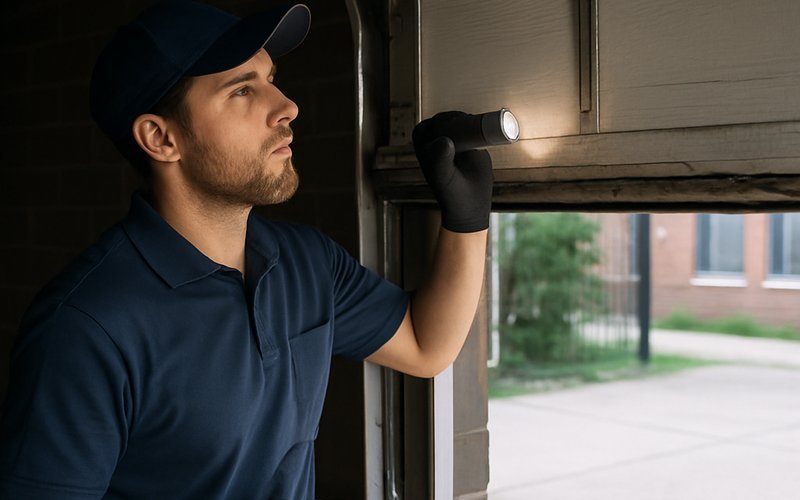
Weatherstripping works only when the door itself closes squarely and completely. If your door has underlying mechanical problems, new seals won’t solve the air infiltration problem. They’ll just mask it temporarily.
Here are the conditions that must be addressed before weatherproofing will hold:
| Problem | Effect on Weatherproofing | Repair Needed First | Typical Cost |
|---|---|---|---|
| Broken or worn torsion spring | Door doesn’t close fully or evenly | Spring repair or replacement | $150–$350 |
| Bent or damaged door panel | Gap along bottom or sides despite new seal | Panel replacement | $200–$600 per panel |
| Door off track | Uneven gap on one side | Off-track repair | $120–$280 |
| Worn rollers or bent track | Door binds and doesn’t seat flush | Roller or track adjustment | $80–$200 |
| Rotted door frame or stop molding | Seal has no solid surface to compress against | Carpentry repair before sealing | $75–$250 |
A homeowner in Logan Square called for weatherstripping replacement after noticing a persistent draft. The contractor found that the door’s left roller bracket was bent, causing the door to sit about a half-inch higher on the left side when closed. No bottom seal in the world fixes a half-inch mechanical gap. The roller bracket was replaced first for $140, and then the weatherproofing job proceeded normally. Total cost: $310. Had she only replaced the seal, she’d have spent $80 and still had the same draft.
The lesson: always have a contractor inspect door alignment and operation before starting seal replacement. The best contractors do this automatically. Watch out for any company that quotes weatherstripping over the phone without asking about door function first.
How to Choose the Right Garage Weatherproofing Contractor in Chicago
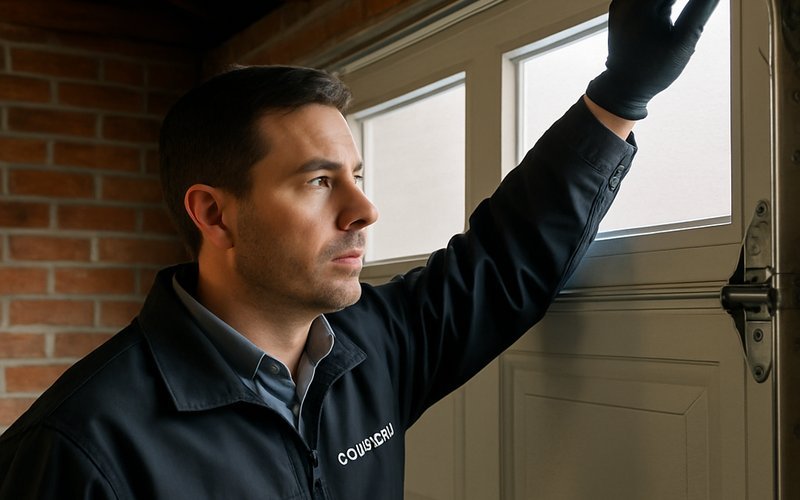
Not every garage door company treats weatherproofing as a real service. Some treat it as a quick upsell during another call, using generic hardware-store seals that won’t survive two Chicago winters. Here’s how to separate good contractors from the rest.
First, ask what brand and grade of seal material they use. Commercial-grade EPDM rubber bottom seals last significantly longer than PVC alternatives in freeze-thaw conditions. If a contractor can’t tell you what material they’re installing, that’s a red flag.
Second, ask whether they’ll inspect the door frame and alignment before replacing seals. As the Logan Square example above shows, mechanical problems render new weatherstripping useless. A contractor who skips that inspection is either in a hurry or not thinking about your actual outcome.
Third, check that they hold an active Illinois contractor license and carry liability insurance. Garage door work involves spring tension and heavy panels. You want someone covered if something goes wrong. Illinois licenses for garage door contractors fall under the Department of Financial and Professional Regulation. You can verify a license at IDFPR’s online lookup tool before anyone shows up at your door.
And get at least two quotes. Prices in Chicago vary. A $150 quote and a $400 quote for the same scope aren’t necessarily different quality, but they need to be itemized the same way to compare fairly. Ask both contractors to break out parts and labor separately. Here’s how to find a trustworthy garage door contractor in Chicago without getting overcharged.
Next Steps for Chicago Homeowners: Get Your Garage Ready Before the Cold Returns
The ideal time to weatherproof your garage door in Chicago is late summer or early fall, before temperatures drop and before the seals you’re replacing freeze in place and become harder to remove cleanly. But if you’re reading this in November or February, don’t wait for spring. A failed bottom seal in a Chicago winter can let in enough cold air to freeze pipes in an attached utility space, and water intrusion under the door accelerates concrete spalling and wood rot every single thaw cycle.
Start by doing a simple light test tonight: close your garage door fully, turn off the garage light, and look at all four edges of the door from inside. Any light coming through indicates a gap. A dollar bill test works too: close the door on a dollar bill and try to pull it out. If it slides out without resistance, the seal in that spot is gone.
If your door passes the light test but still feels drafty, the problem may be the door panels themselves rather than the seals. Check out common garage door problems in Chicago to diagnose what’s actually happening before you spend money on seals that won’t solve the root issue.
For most Chicago homeowners, a full garage weatherproofing job is a $180–$600 investment that pays back in lower heating bills, reduced moisture damage, and a garage door that functions reliably all winter. Don’t wait until the first deep freeze to find out your seals failed. Contact a licensed Chicago garage door contractor now, get the door inspected and quoted, and get the work done before the weather makes the job harder and the damage more expensive.