
Garage door safety sensors are small devices, but they play a critical role in ensuring a garage door operates safely. Many homeowners notice the sensors only when they stop working, even though these components are active every time the door opens or closes.
Understanding how garage sensors work helps explain why doors reverse unexpectedly, stop midway, or fail to close. This guide describes how garage door safety sensors work, focusing on infrared beams, alignment, and light signals, without getting overly technical.
What Garage Door Safety Sensors Are Designed to Do
Garage door sensors are designed to prevent the door from closing if something is in its path. This could be a vehicle, a person, a pet, or even a small object on the floor. The sensors continuously communicate while the door is moving; if that communication is interrupted, the door reacts immediately.
When people ask, how do garage sensors work, the short answer is that they rely on an invisible beam and a constant line of sight.

Understanding IR Beams
At the core of the system is an infrared (IR) beam. One sensor sends the beam, and the other receives it. The beam runs just a few inches above the garage floor, where obstructions are most likely to occur.
If anything breaks that beam while the door is closing, the system recognizes it instantly. The opener then stops the door or reverses it. This process occurs in real time and does not require pressure or contact.
Understanding this beam is essential when learning how garage sensors work, because even minor interruptions can trigger a response.
Why Sensor Alignment Matters
Alignment is one of the most essential factors in sensor performance. Both sensors must face each other directly so the IR beam can travel uninterrupted.
If one sensor shifts slightly due to vibration, impact, or loose mounting hardware, the beam may no longer reach the receiving sensor. When this happens, the system behaves as if a door is blocked, even when nothing is there.
In many service checks, misalignment is the most common cause of sensor malfunctions.
What Sensor Light Signals Mean
Most garage sensors include small indicator lights. These lights help show whether the sensors are powered and communicating properly.
While colors vary by manufacturer, the general purpose is the same:
- A steady light usually means the sensor is active
- Blinking or flickering often suggests alignment or signal issues
- No light may indicate a power or wiring problem
Light signals are a visual way to understand how garage sensors work without tools or testing equipment.
How Sensors Communicate With the Opener
The sensors are connected to the garage door opener through low-voltage wiring. When the IR beam is clear, the sensors signal the opener that it is safe to close the door. If the beam is interrupted, that signal changes instantly.
This constant communication is why the door can stop or reverse so quickly. It also explains why sensor issues affect closing more often than opening.
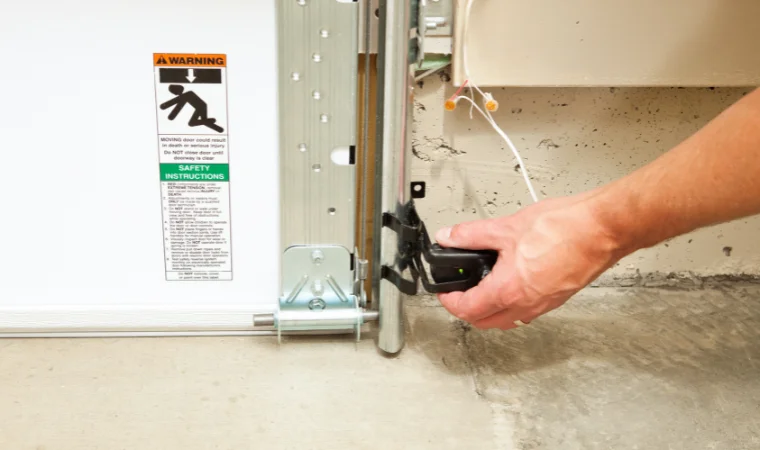
Common Situations That Interrupt Sensor Function
Even when the sensors are working properly, certain conditions can interfere with them:
- Dirt or dust on the sensor lens
- Direct sunlight hitting the sensor
- Objects stored too close to the beam path
- Slight movement in the sensor brackets
- Moisture or condensation near the floor
These issues help explain how garage sensors work in real-world conditions, not just in ideal setups.
Why Safety Sensors Are Required
Garage door safety sensors became standard to reduce injury and property damage. Modern garage doors are powerful; without sensors, they would rely solely on force detection.
For background on safety standards that influence sensor design, the UL garage door operator safety overview provides useful context:
https://ul.com/services/garage-door-operator-safety-standard
This helps explain why sensor systems are built the way they are.
When Sensor Issues Suggest a Larger Problem
Occasional interruptions are normal, but repeated issues may indicate worn wiring, aging sensors, or mounting issues. If sensors require frequent adjustment or the door refuses to close consistently, a professional inspection is often recommended.
Understanding how garage sensors work helps homeowners distinguish between environmental and mechanical issues.
Frequently Asked Questions
1. How do garage sensors work when the door is closing?
They send and receive an infrared beam. If the beam is broken, the door stops or reverses immediately.
2. Why does my garage door open but not close?
Sensors are primarily active during closing. If the beam is blocked or misaligned, the door will not close.
3. Do garage sensors work in the dark?
Yes. Infrared beams do not rely on visible light.
4. Why do sensor lights blink?
Blinking usually indicates alignment issues, signal interruption, or unstable power.
5. Can sunlight affect garage sensors?
Yes. Strong direct sunlight can interfere with the beam and cause false interruptions.
Final Thoughts
Learning how garage sensors work makes it easier to understand why garage doors behave the way they do. These sensors rely on infrared beams, precise alignment, and constant communication with the opener. Small changes in alignment or environment can affect their performance, even when nothing appears broken.
By understanding How Garage Door Safety Sensors Work, homeowners can better identify normal behavior, temporary interference, and situations that may require professional attention.