
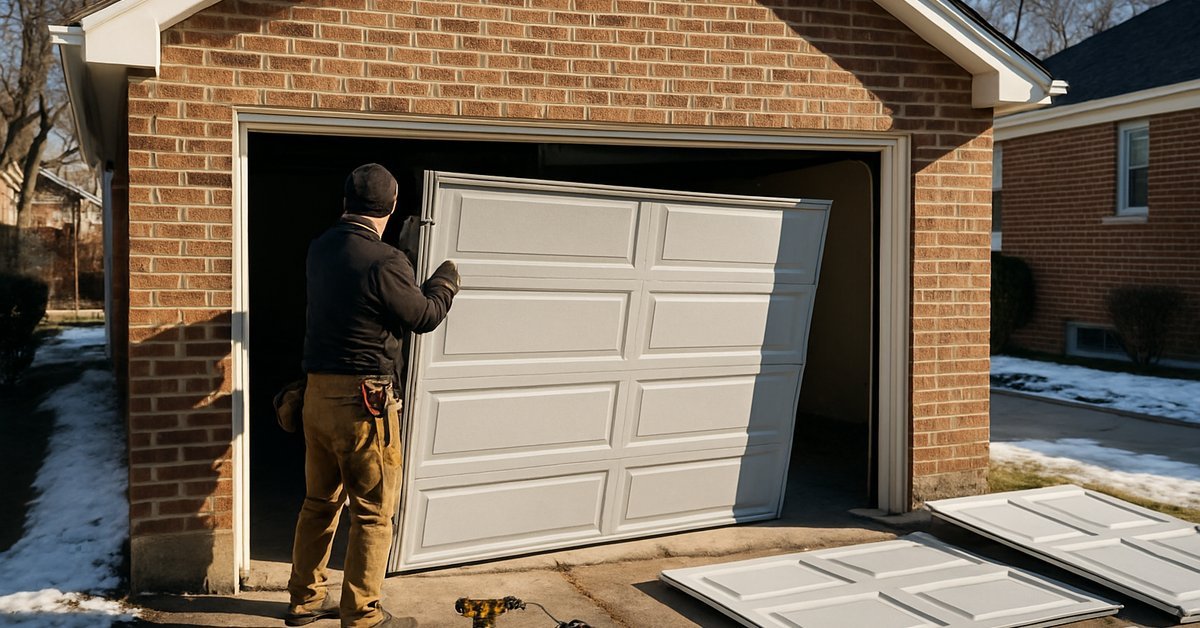
You need a new garage door in Skokie or Chicago and you don’t want to overpay or get surprised by a permit requirement after the job starts — and if you’ve been searching “garage door Skokie,” you’re already on the right track. A standard single-car door replacement runs $800–$2,200 installed, while a two-car door with insulation and a new opener lands closer to $2,500–$4,500. Chicago’s older housing stock, especially the detached alley garages common in neighborhoods like Rogers Park and Logan Square, adds complexity that affects both price and install time. This guide covers everything: real costs, permit rules, door types, and what to expect from installation day through final inspection.
Ready to skip the research? Get a free estimate from a licensed Chicago residential installation contractor before you commit to anything.
How Much Does Garage Door Installation Cost in Chicago in 2026?

In Chicago, garage door installation costs break down into three main variables: the door itself, labor, and any hardware or structural repairs needed to make it fit. Labor alone typically runs $250–$600 for a standard replacement. The door is almost always your biggest expense.
| Door Type | Door Cost (Material Only) | Installed Total (Chicago) | Best For |
|---|---|---|---|
| Steel, single-car (non-insulated) | $300–$600 | $800–$1,200 | Budget-conscious replacement |
| Steel, two-car (insulated) | $700–$1,400 | $1,500–$2,800 | Most Chicago homeowners |
| Wood or faux-wood composite | $900–$2,500 | $1,800–$4,200 | Bungalows, historic homes |
| Custom steel or glass panel | $2,000–$5,000+ | $3,200–$6,500 | Modern builds, commercial fronts |
| Garage door opener (add-on) | $150–$400 | +$350–$600 installed | Any new door install |
A homeowner in Logan Square recently replaced a two-car wood door on their 1920s-era alley garage with an insulated steel door and a belt-drive opener. Total cost: $2,850. The alley-access setup added about $200 in extra hardware because the headroom was tighter than a standard attached garage. That’s a common scenario in Chicago’s older neighborhoods.
Honestly, most contractors will tell you to budget for at least one extra service item you didn’t plan for. Springs wear out, tracks corrode, and older Chicago garages often have non-standard opening widths. If your existing door is more than 15 years old, budget an extra $150–$400 for spring replacement or track adjustment while the crew is already there.
If you want an accurate quote based on your specific garage dimensions and neighborhood, see what Chicago residential installation actually costs for your setup.
What Type of Garage Door Should Chicago Homeowners Actually Buy?
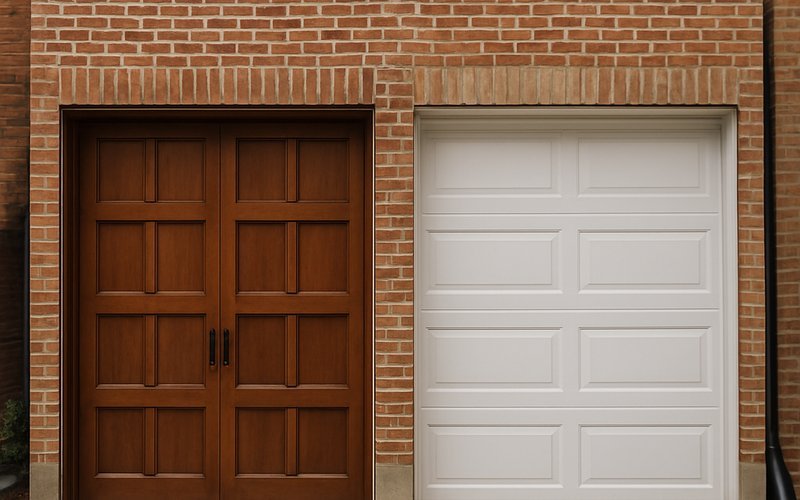
Chicago winters are brutal. Temperatures drop below 0°F multiple times per season, humidity fluctuates wildly in spring and fall, and road salt gets tracked into garages all winter long. Your door choice has to account for all of that, not just curb appeal.
| Material | Insulation (R-Value) | Winter Performance | Maintenance Level | Lifespan |
|---|---|---|---|---|
| Steel (non-insulated) | R-0 to R-2 | Poor | Low | 15–20 years |
| Steel (insulated, double-layer) | R-6 to R-9 | Good | Low | 20–25 years |
| Steel (insulated, triple-layer) | R-12 to R-18 | Excellent | Low | 25–30 years |
| Wood | R-3 to R-5 | Fair | High | 15–20 years with upkeep |
| Faux-wood composite | R-6 to R-12 | Good | Low-Medium | 20–30 years |
| Aluminum / Glass | R-4 to R-8 | Fair | Medium | 20–25 years |
For most Chicago homeowners, a triple-layer insulated steel door is the right answer. It handles temperature swings better than wood, it doesn’t warp or swell in humidity, and it doesn’t need annual repainting. The R-12 to R-18 range makes a real difference if your garage is attached to your living space or if you use it as a workshop in winter.
Wood doors look beautiful on Chicago bungalows, and there’s no denying that. But real wood requires repainting or restaining every 2–4 years in this climate. Faux-wood composite panels give you the same aesthetic at lower long-term maintenance cost. The cheaper option isn’t always wrong — if the garage is detached and unheated, a non-insulated steel door works fine and saves you $600–$900 up front.
Do You Need a Permit for Garage Door Installation in Chicago?

In Chicago, a full garage door replacement requires a building permit from the City of Chicago Department of Buildings. This applies when you’re removing an existing door and frame and installing a new unit. Swapping just the opener does not require a permit on its own.
You can apply through the Chicago DOB’s online permit portal (available at chicago.gov/buildings). For a standard residential door replacement, you’re typically looking at a Type I or Type II easy permit, which can be issued same-day or within 24 hours for straightforward projects. The permit fee is generally $50–$150 for residential work, though it scales with project valuation.
Here’s the part most homeowners miss: if your garage is in a landmark district, like parts of the Wicker Park-Bucktown area, there may be additional review requirements through the Commission on Chicago Landmarks. That can add 2–6 weeks to your timeline before installation even starts. Ask your contractor to check this before you order a door.
For more on what Chicago’s permit rules actually require for garage work, this breakdown of Chicago garage door repair permits clarifies exactly when you need paperwork and when you don’t.
What Does the Installation Process Look Like, Start to Finish?
A standard Chicago garage door installation takes 3–6 hours for a single-car door and 5–8 hours for a two-car door. Here’s what actually happens on installation day, in order.
- Old door removal: The crew disconnects the opener, removes the springs (carefully — torsion springs are under extreme tension), pulls the panels, and removes the tracks and hardware. This usually takes 45–90 minutes.
- Track and framing inspection: Good installers check the rough opening width and height, inspect the header board, and verify the floor seal situation. Old Chicago garages sometimes have out-of-square openings that need shimming or minor framing work.
- New hardware installation: Vertical and horizontal tracks go in first, then the torsion spring assembly is set across the header. This is the most technically demanding part and the reason DIY installation carries real injury risk.
- Panel assembly: Sections are installed bottom-up, with rollers inserted into tracks as each panel goes in. Weather stripping is applied to the bottom and sides.
- Opener mounting and programming: If you’re adding or replacing an opener, it mounts to the ceiling, the drive rail connects to the door, and safety sensors are set and aligned at the base of the tracks.
- Balance test and final adjustment: The installer disconnects the opener and manually lifts the door to check spring balance. A properly balanced door stays put when lifted halfway. If it drops or rises on its own, spring tension is adjusted.
Don’t let anyone skip the balance test. An imbalanced door puts stress on your opener motor and can cause the door to drop unexpectedly. It’s a five-minute check that matters.
Garage Door Installation in Skokie and North Chicago Neighborhoods: What’s Different?
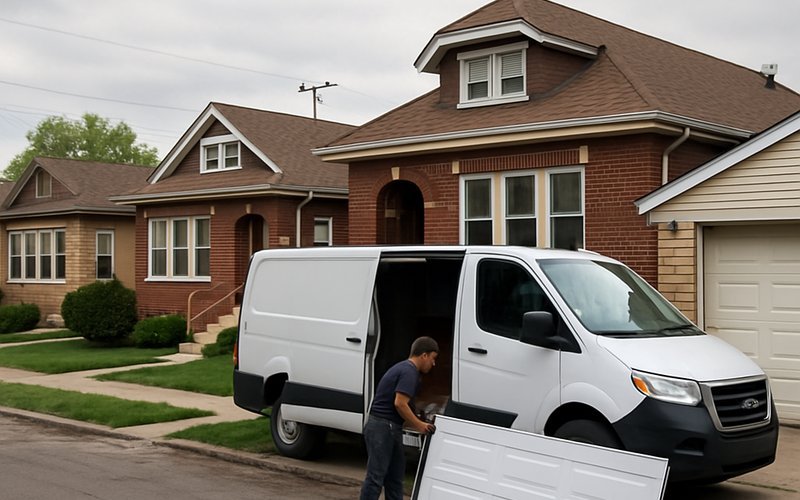
If you’re searching for garage door service in Skokie or live in one of Chicago’s North Side neighborhoods, you’re dealing with a specific housing profile that affects your installation. The detached, alley-access garage is the dominant structure in areas like Rogers Park, Edgewater, and Andersonville — and those buildings have quirks that standard suburban installs don’t have.
Headroom and Clearance
Older detached garages in North Chicago neighborhoods often have low headroom — sometimes as little as 10–12 inches above the door opening. Standard torsion spring setups require at least 12 inches. If you have less than that, you’ll need a low-headroom hardware kit, which adds $150–$300 to the job. Any reputable installer will measure this before quoting.
Non-Standard Widths
Pre-war construction in neighborhoods like Rogers Park often produced garages with 9-foot or 9.5-foot opening widths rather than the standard 8-foot or 10-foot. That means your door needs to be custom-ordered or carefully sized, adding 1–2 weeks to lead time and $200–$500 to cost. A homeowner in Edgewater recently discovered this the hard way when their contractor ordered a standard 10-foot door that wouldn’t close flush on a 9.5-foot opening. Measure twice, order once.
Weatherproofing
Alley garages in these neighborhoods take more wind exposure than attached suburban garages. Good bottom seals and side weatherstripping are especially important. If your garage floor has settled and isn’t level, a contoured bottom seal will work better than a flat one. For more on this, Chicago garage weatherproofing costs and what actually works goes into this in detail.
Residential vs. Commercial Garage Door Installation in Chicago: Which Do You Need?
Most homeowners searching for garage door Skokie or Chicago installation need residential service. But Chicago has a lot of mixed-use buildings, coach houses, and small business owners who might be confused about which category applies to them.
Residential installation covers single-family homes, two-flats, coach houses, and most condo-garage setups. These doors are typically 7–8 feet tall, operate on torsion springs, and use chain, belt, or screw-drive openers. The average residential installation takes one day and one crew of two.
Commercial installation applies to retail buildings, restaurants with loading access, multi-unit parking structures, and warehouses. These doors are often 10–14 feet tall, use industrial-rated springs and operators, and may require steel curtain or rolling steel construction rather than sectional panels. Commercial installs typically run $2,500–$12,000+ depending on size and operator type, and they almost always require a full permit pull with structural inspection.
If you run a small business out of your home and your garage faces a public alley, you’re almost certainly still in residential territory. Call it commercial only if the structure is zoned for business use or if the door exceeds standard residential sizing. When in doubt, a licensed contractor will tell you which category fits after a site visit.
How Do You Find a Reliable Garage Door Installer in Chicago Without Overpaying?
Before you hire anyone, verify three things: a valid Illinois contractor’s license, proof of liability insurance, and a written quote that itemizes labor and materials separately. A quote that just says “$1,800 total” without a breakdown is a red flag.
- Get at least two quotes. Chicago has a dense contractor market. Prices vary by 15–30% for the same job between different companies.
- Ask about spring type. Torsion springs cost more upfront than extension springs but last significantly longer, especially in Chicago’s cold. A contractor pushing extension springs on a new install is cutting corners.
- Check the warranty. A reputable installer offers at least a 1-year labor warranty and passes through the manufacturer’s warranty on the door (typically 1–3 years for basic steel, up to lifetime for premium doors).
- Ask if they pull the permit. A licensed contractor should handle permit paperwork. If they tell you permits aren’t required for a full replacement, that’s wrong, and it means the liability falls on you.
Checking Google reviews is useful, but look specifically for reviews that mention post-install problems and how the company responded. Any company can do a clean install. A good company fixes problems when something goes wrong 6 months later.
Need help figuring out whether your current door is worth repairing or replacing entirely? This repair vs. replacement guide for Chicago helps you make that call before spending money on either.
Ready to Install? Next Steps for Chicago Homeowners
You know your cost range, you understand the permit requirements from the City of Chicago Department of Buildings, and you know what door type makes sense for Chicago’s climate. The next step is getting a quote that’s specific to your garage, not a ballpark based on averages.
Here’s what to do now: measure your opening width and height, check whether you have a detached or attached garage, and note any headroom constraints above your door opening. That’s all the information a contractor needs to give you an accurate number on the first call.
Fairway Garage Door handles residential garage door installation across Chicago, including full replacements, opener upgrades, and custom sizing for older alley garages. If you want a straightforward quote from a licensed Chicago contractor without a sales pitch, reach out today and get it scheduled.