
Oak Park homeowners deal with garage door failures at both extremes of the calendar, and the parts that break in January are completely different from the ones that give out in July. Chicago weather garage door problems hit this village harder than most suburbs because of its specific housing stock: alley-access detached garages, century-old wood-frame construction, and a temperature range that swings more than 100 degrees every single year. This guide breaks down exactly what fails in each season, what it costs to fix it, and when you’re better off replacing instead of repairing.
Get a free estimate from a licensed Oak Park contractor before the next weather event catches you off guard.
Why Does Chicago’s Climate Hit Oak Park Garage Doors Harder Than Most Suburbs?
Oak Park sits in the direct path of every weather system that rolls across Lake Michigan and the open prairie, and its housing stock was built long before anyone worried about thermal cycling. The Ridgeland Historic District is full of wood-frame detached garages from the 1920s and 1930s. The streets south of Lake Street have a similar mix of older brick-and-wood structures where the garage is a secondary thought, not a climate-controlled space.
Wood expands in summer humidity and contracts in winter cold. Steel does the same, just less visibly. A garage door that fits perfectly in September can be binding against its tracks by February and dragging its seals by August. That 100-plus-degree annual swing isn’t just uncomfortable; it’s a mechanical stress test your door takes twice a year, every year.
The 2019 polar vortex dropped Oak Park to nearly minus-20 degrees Fahrenheit. That’s not a number most garage door hardware is rated for. Metal becomes brittle. Lubricants gel. Rubber seals turn rigid. And then summer arrives and reverses every single one of those stresses in the opposite direction. The combination is what breaks things, not just the cold alone or just the heat alone.
Oak Park’s mix of detached and attached garages matters here too. A detached alley garage has no insulation benefit from the house beside it. It sees the full ambient temperature on every surface. An attached garage is somewhat buffered, but its opener and circuit board still bake in July and freeze in January. Neither type gets a pass.
What Garage Door Parts Break First During Oak Park’s Polar Vortex Winters?
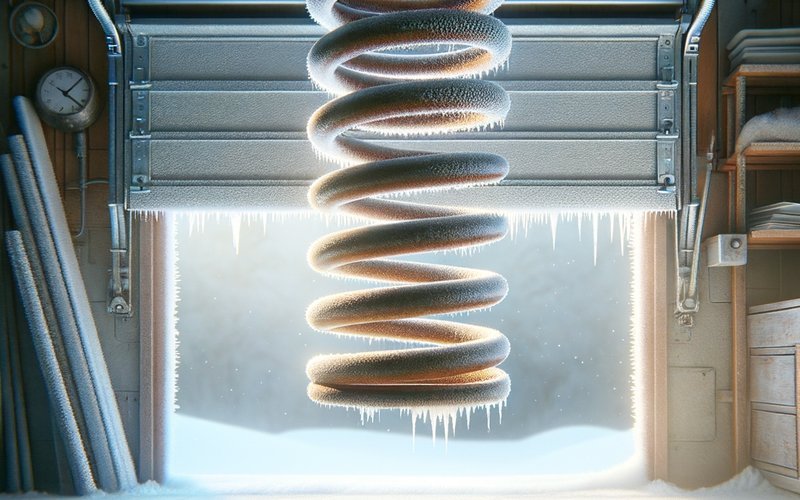
Torsion springs are the most common winter failure in Oak Park, and the reason is simple: steel becomes brittle below zero. A torsion spring is under significant tension every moment your door is closed. At minus-15, that metal has lost flexibility. A small fatigue crack that’s been developing for months finally gives, and you wake up to a spring snapped in two.
Picture a homeowner on Euclid Avenue heading out on a minus-15 morning. The door opener hums, strains, and barely lifts the door two inches before stopping. That’s the torsion spring gone. The opener isn’t broken; it just can’t compensate for the full dead weight of the door without spring assist.
Here’s what else breaks in polar vortex conditions:
- Galvanized cables and cable sheaves: Cables fray and sheaves seize when lubricant freezes solid. A seized sheave causes uneven lift and can shred a cable fast.
- Nylon rollers: Budget nylon rollers crack at sub-zero temps. Steel rollers fare better, but they’re noisier.
- Bottom seals: The rubber or vinyl bottom seal freezes directly to the concrete slab. When the opener tries to lift the door, the seal tears instead of releasing. Sometimes it peels clean off in one pull.
- Opener motor capacitors: Cold reduces the electrical efficiency of capacitors. An opener that worked fine in October may refuse to start in January because the starting capacitor can’t deliver enough torque to overcome a cold, stiff door.
- Extension spring safety cables: These are the secondary cables threaded through extension springs. They don’t break as often as torsion springs, but they fray faster in cold weather when the main spring is under extra stress.
One honest note: if your springs are more than 7 years old and you live in Oak Park, don’t wait for a polar vortex to test them. Get them inspected in October. The repair is far cheaper than a same-day emergency call in February.
What Fails in Oak Park’s 90-Degree Humid Summers That Winter Never Touches?

Summer damage in Oak Park is slower and quieter than a snapped spring, but it adds up just as fast. The biggest summer failure in Oak Park’s bungalow and pre-war housing stock is wood panel warping. When humidity climbs into the 80-plus-percent range, which is routine in a Chicago July, wood panels absorb moisture, swell, and push against their frames. Panels separate at the joints. Paint blisters and peels. A door that looked fine in May starts binding and groaning by August.
The Harrison Street and Home Avenue corridors have a high concentration of older detached garages with wood panel doors and zero ventilation. In summer, interior garage temps in these structures can hit 120 degrees by early afternoon. That heat alone warps panels over time. Add Chicago’s humidity and you’re looking at a door that degrades measurably every summer.
Other summer-specific failures include:
- Vinyl bottom seals softening: The reverse of the winter problem. Heat makes vinyl seals soft and pliable to the point they lose their shape and no longer create a weather-tight contact with the slab.
- Opener circuit board overheating: An opener mounted in a garage with no ventilation can see internal temps that exceed its rated operating range. Circuit boards fail silently. You press the remote, nothing happens, and the board is the reason.
- Torsion spring tension drift: Metal expands in heat. A torsion spring that’s wound to the correct tension in winter is slightly looser in summer, which changes how the door balances and moves. Over years, this contributes to uneven wear.
- Track alignment drift: On longer horizontal track runs, heat causes subtle expansion that shifts alignment. A door that closes crooked or sits higher on one side in August is often a track expansion issue, not a hardware failure.
How Much Does Seasonal Garage Door Repair Cost in Oak Park, IL?
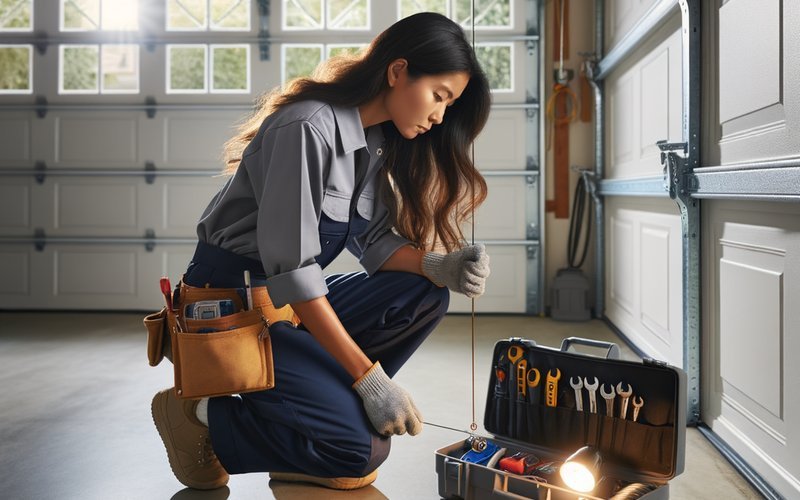
Repair costs in Oak Park follow a predictable pattern: winter emergencies cost more because demand spikes hard during polar vortex events, and you’re paying for a tech who had to drive on dangerous roads to get there. Here’s a realistic breakdown of what you’ll pay for the most common seasonal repairs.
| Repair Type | Winter Repair Cost | Summer Repair Cost |
|---|---|---|
| Torsion spring replacement | $180–$320 | $180–$280 |
| Cable repair | $95–$175 | $95–$150 |
| Frozen/torn bottom seal replacement | $65–$120 | $65–$100 |
| Wood panel warping repair or replacement | N/A (winter rarely drives this) | $250–$600 |
| Opener motor service | $120–$220 | $120–$220 |
| Track realignment | $85–$160 | $85–$160 |
| Emergency same-day call fee | $100–$150 (added on top) | $75–$125 (added on top) |
Emergency winter calls in Oak Park run toward the top of every range. Demand during a polar vortex event means techs are booked out hours in advance, and same-day availability commands a premium. A homeowner in the Ridgeland Historic District paid around $290 for a torsion spring and cable combo repair after a January 2024 cold snap. That’s a fair mid-range price for the work, and it didn’t include an emergency fee because they called early enough in the morning.
If you want an accurate number for your specific door and situation, understanding what emergency repair pricing actually covers before you call saves you from sticker shock.
Does Oak Park Require a Permit for Garage Door Repair or Replacement?
In Oak Park, like-for-like repairs — replacing a broken torsion spring, swapping a cable, or installing a new bottom seal — don’t require a permit. You’re maintaining existing hardware, not changing the structure.
A full door replacement is different. If you’re replacing the entire door unit or making any structural change to the garage opening, you’ll need a permit from Oak Park’s Development Customer Services department, located at Village Hall, 123 Madison Street. The permit cost for a residential door replacement typically runs $75–$200, and turnaround is usually 5–10 business days.
There’s an additional layer for some Oak Park addresses. The Frank Lloyd Wright Historic District and other locally designated historic areas may require additional design review for any exterior changes visible from the street. If your garage faces an alley, you’re generally exempt from that review. If it faces the street, check with Development Customer Services before ordering a replacement door. Getting this wrong means a stop-work order and a delay you didn’t budget for.
For a deeper look at when permits apply to repair work specifically, this guide on garage door repair permits covers the common gray areas in detail.
Which Oak Park Neighborhoods See the Most Weather-Related Garage Door Failures?
Not every block in Oak Park takes the same beating. Three areas consistently produce the most weather-related repair calls.
The Ridgeland Historic District has the highest concentration of pre-1940 wood-frame detached garages with alley access. These structures were built for a Model T, not a modern insulated steel door. The wood construction responds to every temperature shift, and most of these garages have never had their original door hardware upgraded. Spring failures in winter and panel warping in summer are both common here.
The streets south of Chicago Avenue are bungalow territory, and bungalow-era attached garages see a specific pattern: because the garage is physically connected to the house, the bottom seal gets compressed between a warmer interior and a cold exterior slab. Freeze-and-thaw cycles tear these seals faster than almost any other Oak Park address type. Frozen seal failures are disproportionately concentrated in this part of the village.
Closer to Oak Park Avenue, newer construction with steel panel doors handles temperature swings better on the door itself. But opener circuit boards in uninsulated attached garages still overheat in July, and that’s where summer repair calls come from in this corridor.
One concrete example: a detached alley garage on Scoville Avenue needed a torsion spring replacement in February of one year and a full wood panel replacement in August of the same year. The 1940s wood door couldn’t handle either seasonal extreme. The homeowner ended up replacing the entire door that fall rather than face a third repair the following winter.
Should Oak Park Homeowners Repair or Replace After Seasonal Damage?
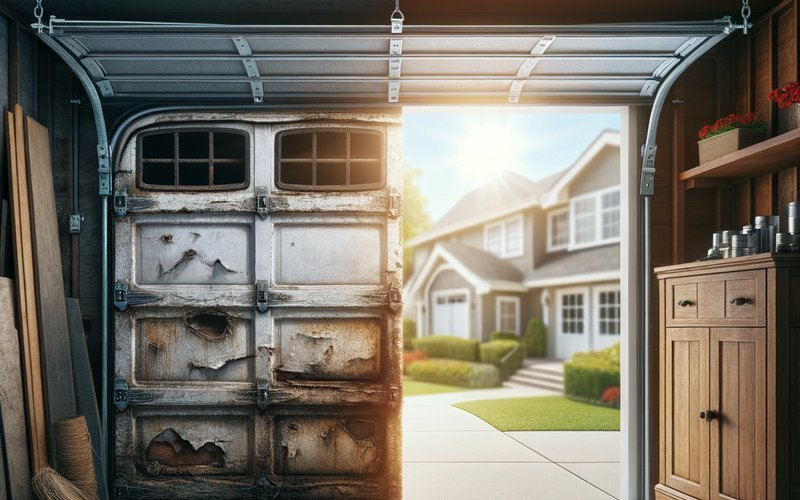
Single-incident damage is almost always worth repairing. A snapped torsion spring on an otherwise sound door, a torn bottom seal, a seized cable: fix it, maintain it, and it’ll give you another several years. That’s the straightforward case.
But here’s the honest contrarian view: if your door has warped panels from two or three summers plus a broken spring in the last winter, you’re on a repair treadmill. Each repair is individually cheaper than replacing the door, but the total cost across two or three seasons starts to approach replacement cost. And you still end up with an aging door that will fail again.
A standard residential door replacement in Oak Park runs $1,200–$3,500 depending on material, size, and insulation rating. That’s a meaningful cost upfront. But compare it to two emergency repairs plus an opener replacement spread across two brutal Chicago weather seasons, and the math often favors replacing proactively. If you’re heading into another polar vortex winter with a door that’s already shown multiple failure points, replacing before December is frequently the smarter financial call.
For homeowners weighing both sides, this repair vs. replacement breakdown lays out the decision clearly with specific cost comparisons.
How Do You Find a Reliable Garage Door Repair Company in Oak Park for Any Season?
Before you hire anyone, check three things: Illinois contractor licensing through the IDFPR, direct experience with both wood and steel doors (Oak Park has both, and they’re not the same job), and transparent emergency pricing before the tech shows up. A company that won’t give you a ballpark figure over the phone is one you’ll argue with over the invoice.
Red flags are easy to spot. Any contractor who demands full payment before starting work, can’t provide a local address, or gives you a quote that’s suspiciously low by 40 percent is worth skipping. In a weather emergency you’re vulnerable, and some companies count on that.
Genuinely local companies serving the Ridgeland Historic District or the South Boulevard area of Oak Park can typically reach a home within 60–90 minutes during a weather event, assuming roads are passable. That response time matters when your garage door is stuck open in January.
Fairway Garage Door serves Oak Park homeowners for both repair and full installation, with experience across the wood-frame and steel door stock that makes up most of the village’s housing. If you’re dealing with a weather-related failure right now or want a pre-season maintenance check before the next polar vortex, they’re a practical first call. Reach out for a quote and you’ll get a straight answer on what your specific door actually needs.
Frequently Asked Questions
Why do garage door springs break more often in Oak Park winters than in other seasons?
Steel loses flexibility at sub-zero temperatures. A torsion spring that’s been accumulating micro-fatigue from years of use will snap cleanest in the cold because the metal can’t absorb stress the way it does at 50 degrees. Oak Park’s polar vortex events, which have pushed temps to minus-20, are especially hard on springs because the brittleness is extreme at those readings. Springs don’t last forever even in mild climates; Oak Park’s winters just accelerate the failure timeline.
Can I manually open my garage door if the spring snaps during a polar vortex?
Yes, but you need to understand what you’re doing first. Disconnect the opener by pulling the red emergency release cord. With both springs broken (or one, on a single-spring system), the door is at full dead weight, typically 150–300 pounds. You can lift it manually from the bottom with both hands, but don’t let go. There’s no counterbalance. The door will drop immediately if you release it. Get it open, prop it with something solid, and do not use the opener until the spring is replaced. Trying to force it with the motor risks shredding your cable or bending the track.
How do I stop my garage door seal from freezing to the ground in winter?
The most effective method is a silicone-based lubricant applied to the bottom seal and the concrete slab surface before temperatures drop below freezing. Don’t use petroleum-based products; they attract dirt and degrade rubber faster. A thin coat of silicone spray on the seal itself before a cold snap prevents the rubber from bonding to frozen concrete. If your seal has already torn from freeze-adhesion, replace it with a cold-weather rated vinyl seal rated to at least minus-30. Standard vinyl seals sold at hardware stores often aren’t rated below minus-10.
Does humidity in Oak Park summers really warp wood garage door panels?
Yes, and it’s one of the most common summer repair issues in the village’s older housing stock. Wood is hygroscopic, meaning it absorbs and releases moisture continuously. When Oak Park’s summer relative humidity hits 80-plus percent for days at a stretch, wood panels swell unevenly. Panels that are painted on one side and raw on the other (common on older doors where interior painting was skipped) warp toward the raw side because moisture absorption is asymmetric. Proper sealing on all six surfaces of every panel is the only real prevention.
What is the fastest repair a technician can make on-site during an Oak Park winter emergency?
A bottom seal replacement is the fastest, typically 20–30 minutes on-site. Cable repairs on a door that’s otherwise functional are usually 30–45 minutes. A single torsion spring replacement by an experienced tech runs 45–75 minutes depending on spring size and whether the cable needs attention too. What slows everything down in winter is working in a cold, cramped alley garage with gloves on. The repair itself isn’t complex; the conditions are just brutal.
How often should Oak Park homeowners schedule garage door maintenance given Chicago’s temperature swings?
Twice a year is the practical answer for Oak Park’s climate: once in October before temperatures drop below freezing, and once in April after winter stress has had its full effect. The October visit should cover spring inspection, lubrication with a cold-weather rated product, seal condition, and cable fraying. The April visit checks for winter damage: cracked rollers, frayed cables, seal tears, and any track movement from freeze-thaw cycles. Homeowners with wood panel doors should add a third check in late June to catch early panel warping before it gets structural.