
Chicago homeowners face a simple choice every year: spend a little now on upkeep, or spend a lot later on emergency repairs. Garage door maintenance in Chicago runs $100–$250 for a professional visit, and that number is well worth it when temperatures swing from 90°F in July to -15°F in February. Chicago’s climate is genuinely one of the hardest on garage door components in the country. This guide covers what maintenance includes, what it costs, which parts fail first, and when it stops making financial sense to keep maintaining an old door.
Get a free estimate from a licensed Chicago garage door contractor before your next seasonal swing hits.
What Does Garage Door Maintenance Actually Include in Chicago?
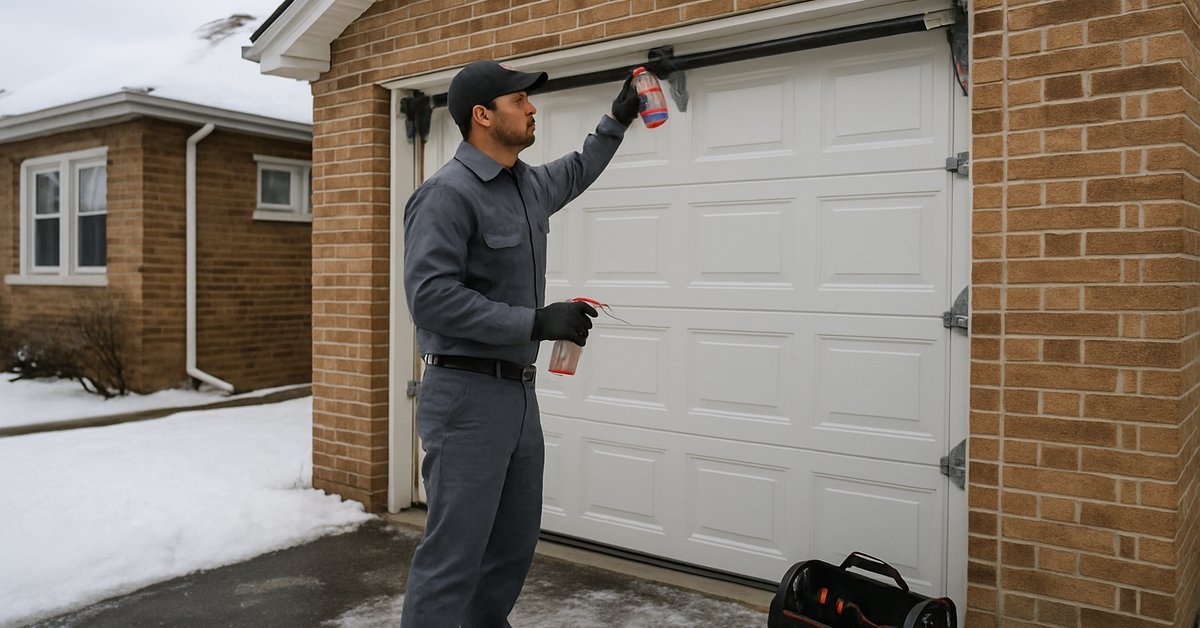
A proper garage door maintenance visit in Chicago covers six core tasks: lubrication of all moving parts, spring tension adjustment, cable inspection, roller and hinge check, weatherstripping evaluation, and opener force-limit testing. That’s the baseline. Any contractor skipping one of those isn’t doing full maintenance — they’re doing a partial check.
Here’s what each task actually means in practice:
- Lubrication: Springs, rollers, hinges, and tracks get coated with a lithium-based or silicone spray. WD-40 is not the right product — it evaporates fast and attracts grime. A Chicago winter will dry out improperly lubricated parts in weeks.
- Spring tension adjustment: Torsion springs lose calibration over time. A detuned spring strains your opener motor and puts uneven stress on cables.
- Cable inspection: Frayed or kinked cables are a safety hazard. In Chicago, temperature cycling causes metal fatigue faster than in warmer climates.
- Roller and hinge check: Nylon rollers crack in cold. Steel rollers corrode. Both get checked for wear and replaced if needed.
- Weatherstripping evaluation: Chicago’s road salt and freeze-thaw cycles destroy rubber bottom seals within 2–3 years. Gaps let cold air, moisture, and pests in.
- Opener force-limit testing: Safety reverse sensitivity drifts over time. This test confirms your door reverses correctly if it hits an obstruction.
A homeowner in Logan Square recently had a maintenance visit where the technician found cracked nylon rollers on all six roller brackets — the door still worked fine, but another Chicago winter would have snapped two of them. A $180 tune-up replaced the rollers and prevented what would have been a $350 off-track repair. That’s the math behind regular upkeep.
How Much Does Garage Door Maintenance Cost in Chicago in 2026?
In Chicago, a standard professional garage door maintenance visit runs $100–$250 depending on door size, condition, and what gets replaced during the visit. That range accounts for basic single-door tune-ups on the low end, and double-door visits with part replacements on the high end.
| Service Type | Typical Cost in Chicago | What’s Included |
|---|---|---|
| Basic tune-up (single door) | $100–$150 | Lubrication, visual inspection, opener test |
| Full maintenance visit (single door) | $150–$200 | All 6 tasks, roller check, weatherstrip evaluation |
| Full maintenance visit (double door) | $175–$250 | Same as above, more components to service |
| Maintenance + weatherstrip replacement | $220–$350 | Full visit plus new bottom seal and side seals |
| Maintenance + roller replacement (set of 6) | $200–$320 | Full visit plus new nylon or steel rollers |
Parts add cost, obviously. But bundling them into a maintenance visit is almost always cheaper than a separate service call later. Most Chicago contractors charge a $65–$100 service call fee just to show up, so rolling part replacements into a scheduled visit saves that fee.
If you want an accurate quote for your specific door and situation, see full pricing details for Chicago garage door services before committing to anything.
How Do Chicago’s Seasons Destroy Garage Doors Faster Than Anywhere Else?
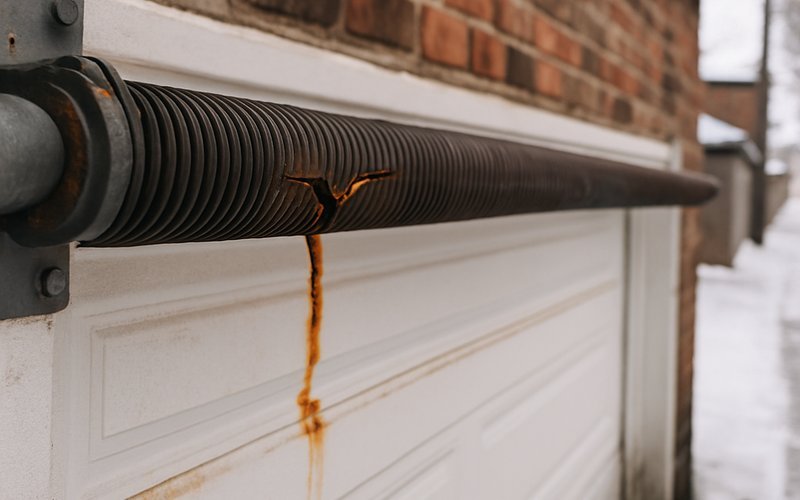
Chicago’s climate is brutal on garage doors in a very specific way: it’s not just the cold. It’s the cycling. Temperatures in Chicago regularly swing 30–40°F within 48 hours during winter and early spring. Metal expands and contracts with every swing. Steel cables fatigue. Torsion springs lose temper. Nylon rollers crack.
And then there’s the road salt. Chicago uses enormous quantities of rock salt and brine on streets and alleys from November through March. That salt spray drifts onto door panels, tracks, and hardware. Steel components corrode. Painted finishes bubble and flake. Rubber weatherstripping degrades months faster than it would in a drier climate.
Season-by-Season Breakdown
Fall (October-November): This is your prep window. Lubricate everything, check weatherstripping, and test the opener before temps drop. Cold openers work harder, and a marginal motor will fail in January — not October.
Winter (December-March): Springs are under maximum stress. Cold steel contracts, which increases tension on already-loaded torsion springs. Ice can freeze the bottom seal to the concrete floor, causing motor strain or seal damage when the door opens. This is when most emergency calls happen in Chicago.
Spring (April-May): Salt residue left on hardware accelerates corrosion as temps warm. A post-winter inspection is the right time to clean tracks, check for rust, and replace any weatherstripping that cracked over winter.
Summer (June-August): Heat expansion loosens hardware. Track alignment can shift. Opener photo-eyes can get misaligned by warping. It’s a lower-risk season, but not a zero-risk one.
Which Chicago Neighborhoods See the Most Maintenance Calls — and Why?
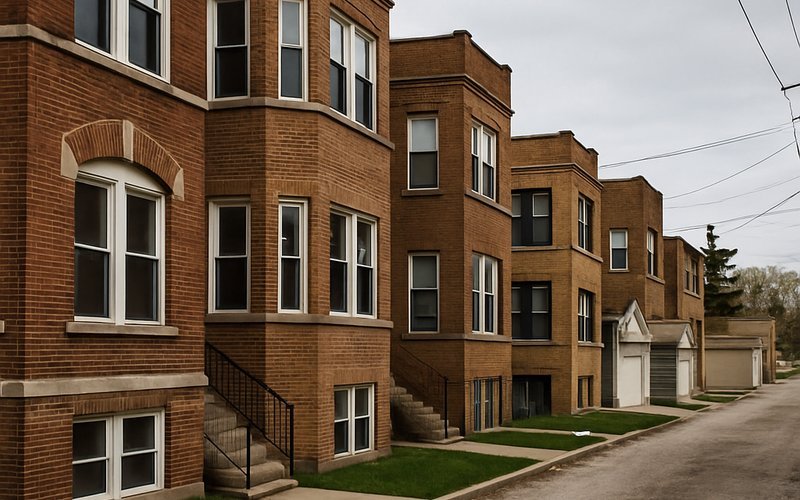
Certain Chicago neighborhoods generate disproportionately high volumes of garage door maintenance and repair calls, and the reasons are structural, not just climate-related.
Pilsen and Bridgeport have large concentrations of older two-flat and three-flat buildings with alley-access garages. Many of these garage doors are original or near-original installations from the 1970s and 1980s. Springs on doors that old are statistically overdue for failure. The alley exposure also means maximum road salt contact through winter.
Beverly and Morgan Park on the Far South Side have a high density of detached single-family homes with older single-car garages. The doors here tend to be wooden or older steel panel designs — both of which are more vulnerable to moisture warping and hinge corrosion than modern steel or composite doors.
Newer construction areas in neighborhoods like Wicker Park and Bucktown see maintenance calls too, but for different reasons: modern openers and smart systems need sensor calibration and software updates that older mechanical systems don’t require.
The pattern across all of them is the same. Deferred maintenance compounds. A door that needed a $150 tune-up in October becomes a $600 spring replacement in January when the spring snaps at 6 a.m. on a Tuesday.
Do You Need a Permit for Garage Door Maintenance Work in Chicago?
Routine garage door maintenance does not require a permit in Chicago. Lubrication, spring adjustment, cable inspection, roller replacement, and weatherstripping are all considered maintenance and repair work, not structural alterations.
Where permits come in is replacement work. If you’re replacing the entire door, the opener, or making structural changes to the garage opening itself, the City of Chicago Department of Buildings requires a permit. Their building permit portal handles applications, and fees are typically calculated based on the value of the work. For a full door replacement, expect a permit fee in the range of $100–$200.
For a detailed breakdown of when permits apply and when they don’t, read this Chicago garage door permit guide — it covers exactly which repair and replacement scenarios trigger the requirement.
One practical note: if a contractor tells you a permit isn’t needed for a full door replacement, that’s a red flag. Unpermitted work can create problems when you sell the property and affect homeowner’s insurance claims.
What Happens If You Skip Maintenance? Real Repair Costs vs. Prevention Costs
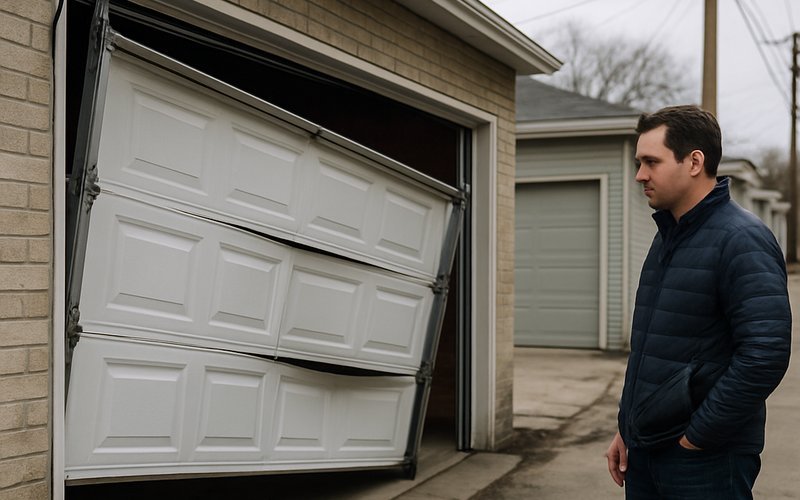
Skipping maintenance in Chicago isn’t just risky — it’s expensive. The repair costs that follow deferred maintenance are almost always multiples of what the tune-up would have cost. Here’s an honest comparison.
| What Gets Skipped | Prevention Cost | Repair Cost When It Fails |
|---|---|---|
| Torsion spring tension check | $150–$200 (included in tune-up) | $250–$500 for spring replacement |
| Cable inspection | $150–$200 (included in tune-up) | $175–$350 for cable repair in Chicago |
| Roller replacement | $50–$100 added to a maintenance visit | $250–$450 for off-track repair |
| Weatherstripping replacement | $70–$130 added to a maintenance visit | Water damage, floor heaving, pest intrusion — costs vary widely |
| Opener force-limit testing | Included in any proper tune-up | $300–$600 for opener replacement if motor burns out |
A homeowner in Pilsen skipped maintenance for three consecutive winters. In year four, both torsion springs snapped on a February morning, the door came off track on the left side, and the opener motor burned out trying to force the door open. Total repair bill: $870. Three years of twice-yearly maintenance would have cost roughly $900 — but the door would still be in good shape instead of requiring another $400 in follow-up repairs.
The math on prevention is clear. The only time it doesn’t work out is when the door itself is too old to justify the spend.
Is Your Door Worth Maintaining — or Is It Time for a Custom Replacement?
There’s an honest answer to this question, and most contractors won’t give it to you upfront. If your door is 15+ years old, has visible panel damage, and requires more than one repair per year, you’re likely spending more keeping it alive than a replacement would cost over the same period.
A standard steel replacement door runs $800–$1,800 installed in Chicago. A custom door — designed to match your home’s architecture, with upgraded insulation and hardware — runs $2,000–$5,500+ depending on materials and size. That sounds like a lot until you price out three more years of repairs on a failing door.
Custom doors also add real resale value. In Chicago’s competitive housing market, curb appeal matters. If you’re in a neighborhood like Wicker Park or Beverly where buyers look hard at exterior details, a well-chosen custom garage door pays back a meaningful percentage of its cost at sale. You can browse options and see what’s available through Fairway’s custom garage doors for Chicago homes — they design for both aesthetics and Chicago’s climate demands specifically.
The replacement vs. maintain decision comes down to: how old is the door, how often is it breaking, and does the garage itself need weatherproofing upgrades anyway? If all three answers point toward “old, often, and yes,” replacement beats maintenance every time.
How to Find the Right Garage Door Maintenance Company in Chicago
Finding a legitimate garage door maintenance company in Chicago takes about 10 minutes of research, and it’s worth doing right. Here’s what actually matters.
- Illinois contractor licensing: Garage door technicians in Illinois should hold a valid contractor registration. Ask for the license number before booking.
- Specific Chicago experience: A technician who understands Chicago’s freeze-thaw cycles, alley-access garage configurations, and older building stock will diagnose problems faster and catch things a general handyman won’t.
- Clear flat-rate or itemized pricing: Reputable companies tell you the service call fee, the maintenance rate, and part costs before any work starts. Vague estimates are a red flag.
- Written service summary: After every visit, you should get a written note of what was done, what was found, and what’s recommended. No paperwork means no accountability.
- Emergency availability: Chicago winters don’t wait for business hours. Confirm whether the company offers emergency response and what that costs before you need it.
Honestly, most homeowners find their garage door company through a neighbor referral or a Google search after something breaks. Neither is a bad starting point, but vet before you book. Read recent reviews specifically mentioning Chicago winter service — that’s the real test of whether a company knows what they’re doing here.
For garage door maintenance in Chicago that’s priced honestly and done right, contact Fairway Garage Door for a Chicago-specific maintenance quote — they’ve been servicing doors across the city’s neighborhoods for years and know exactly what Chicago winters do to hardware.
Frequently Asked Questions
- How often should you schedule garage door maintenance in Chicago?
- In Chicago, most pros recommend at least two maintenance visits per year: one in late October before the freeze sets in, and one in April after the thaw. If your door is older than 10 years or you use it more than four times a day, a third mid-summer check is worth it to catch cable and roller wear before it becomes a repair bill.
- Can I do garage door maintenance myself or do I need a pro?
- You can handle a few things yourself: wiping down tracks, applying a silicone-based lubricant to rollers and hinges, and checking the auto-reverse safety feature. But torsion spring tension adjustment and cable inspection should always go to a licensed tech because a snapped spring under full tension can cause serious injury, and Chicago’s winters put those components under far more stress than average.
- What parts wear out fastest on Chicago garage doors in winter?
- The bottom door seal and torsion springs take the hardest hit. Chicago’s freeze-thaw cycle causes the rubber seal to crack and stiffen, letting cold air and water into the garage, while repeated sub-zero contractions make springs brittle and far more likely to snap. Rollers and cables are close behind, especially on doors in unheated detached garages common in neighborhoods like Pilsen and Bridgeport.
- Does garage door maintenance help my door last longer?
- Yes, consistently maintained garage doors last 20–25 years, while neglected doors in Chicago’s climate often need full replacement in 12–15 years. Lubrication alone reduces motor strain enough to extend opener life by 3–5 years, and catching a worn cable early costs $150–$300 versus $800–$1,400 for an emergency repair after a full failure.
- What should a maintenance visit in Chicago include at minimum?
- A proper visit should cover lubrication of all moving parts, spring tension check and adjustment, cable and drum inspection, track alignment, roller and hinge condition, weather seal inspection, and an auto-reverse safety test. In Chicago, a good tech will also check for moisture intrusion and rust on hardware, which is a specific problem in alley-facing garages exposed to road salt spray all winter.
- How do I know if my garage door needs maintenance or full repair?
- If your door is slow, noisy, or slightly uneven but still opens and closes fully, that’s a maintenance issue, typically a $85–$200 fix. If the door won’t open at all, opens only partway, shows a visibly snapped spring or frayed cable, or has panels that are buckled or separated, you’re into repair territory, which runs $250–$900 depending on the component, or replacement if the damage is structural.